 Aidan Bar-Lev-Wise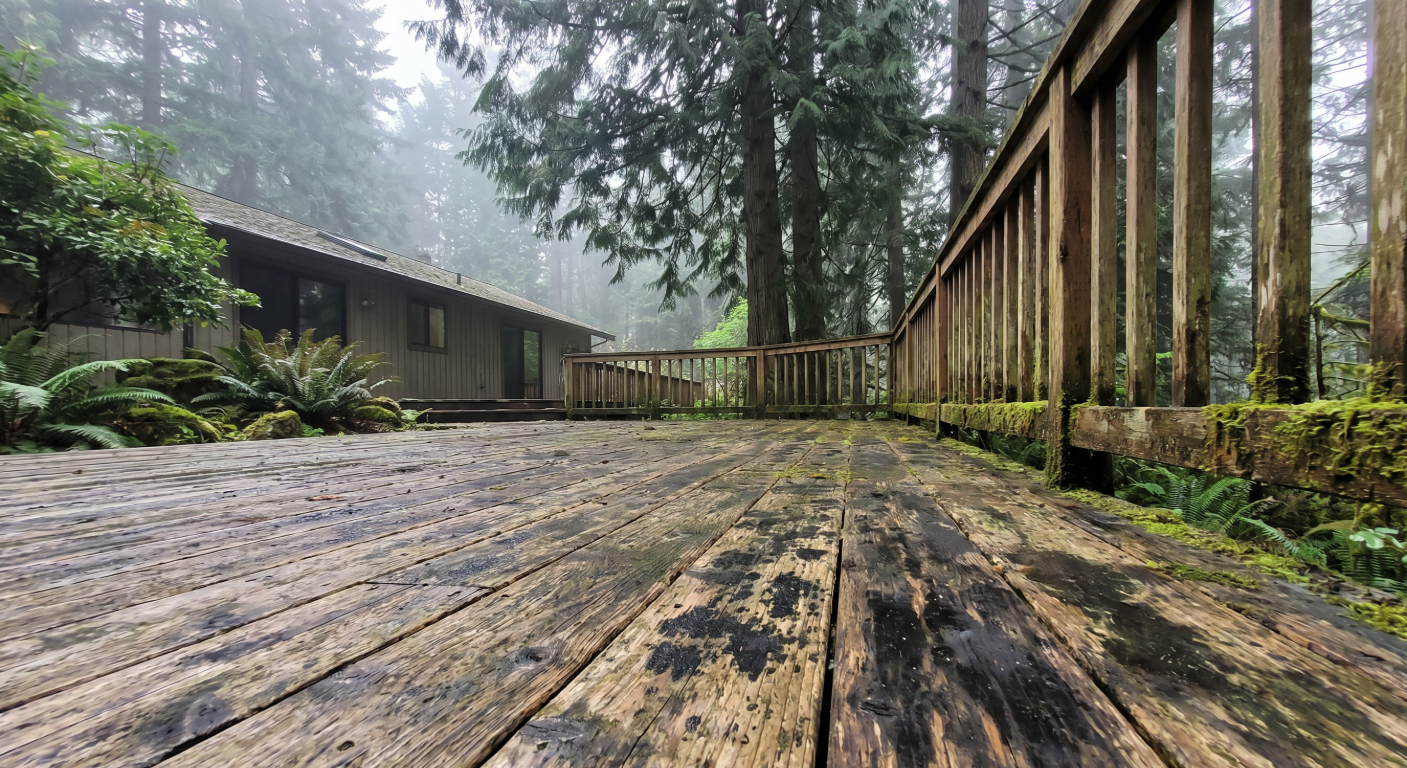
Vancouver's wet, shaded climate makes deck mold one of the most predictable maintenance problems property owners face. With the city averaging more than 1,100 mm of precipitation across over 160 rainy days each year (Environment and Climate Change Canada, 2024), deck boards rarely get a chance to fully dry. Add tree cover and organic debris, and mold growth becomes almost inevitable.
If you have spotted dark patches, fuzzy black spots, or a slippery green film, the good news is that most cases can be resolved without replacing boards. The bad news is that the wrong cleaning method can make things worse. Bleach can damage the wood. High-pressure washing can splinter softwoods like cedar. Surface-level cleaning often leaves the mold to regrow within weeks.
This guide covers how to identify what is growing on your deck, the safest ways to remove it, and how to prevent it from coming back, grounded in more than 10,000 exterior cleaning jobs across the Lower Mainland.
How to Identify What Is Actually Growing on Your Deck
Different growths require different treatments. Identify what you are dealing with first.
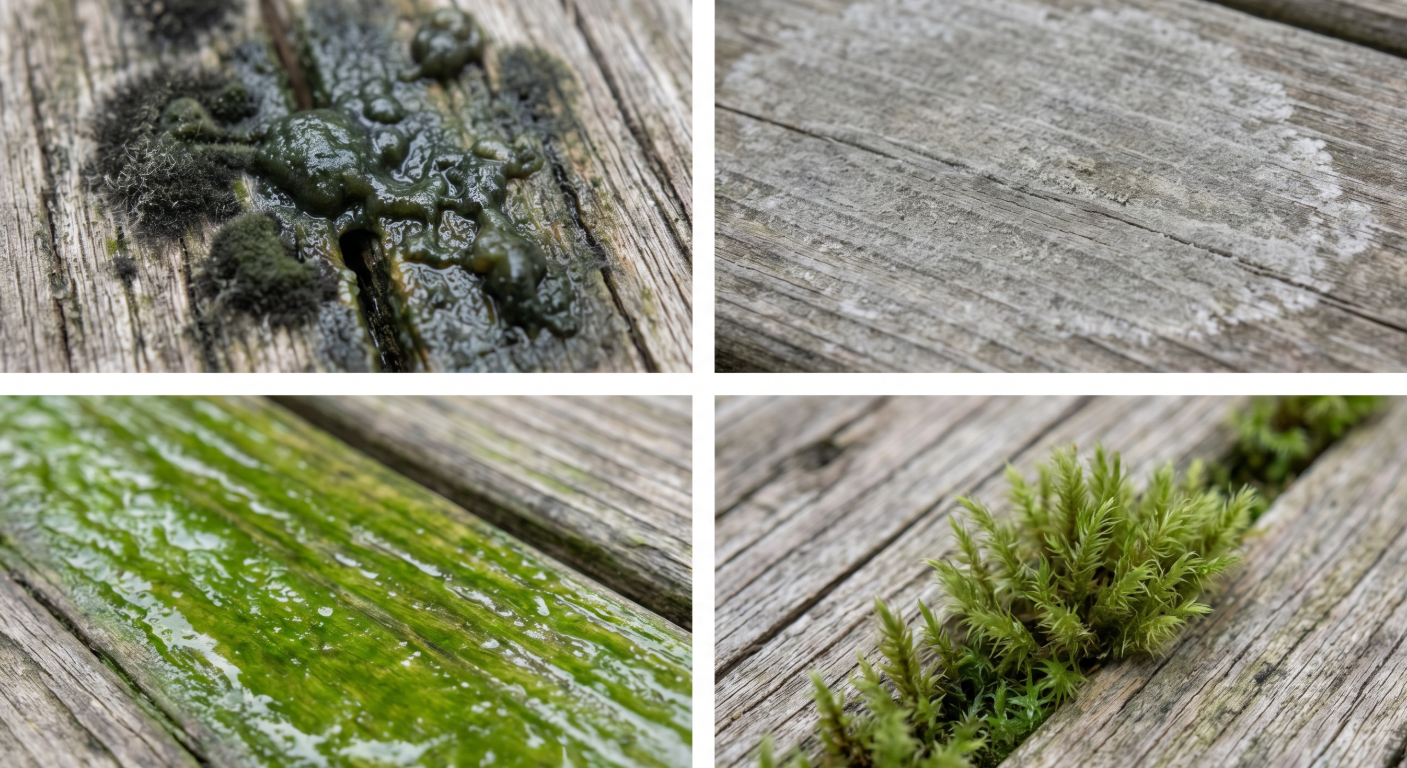
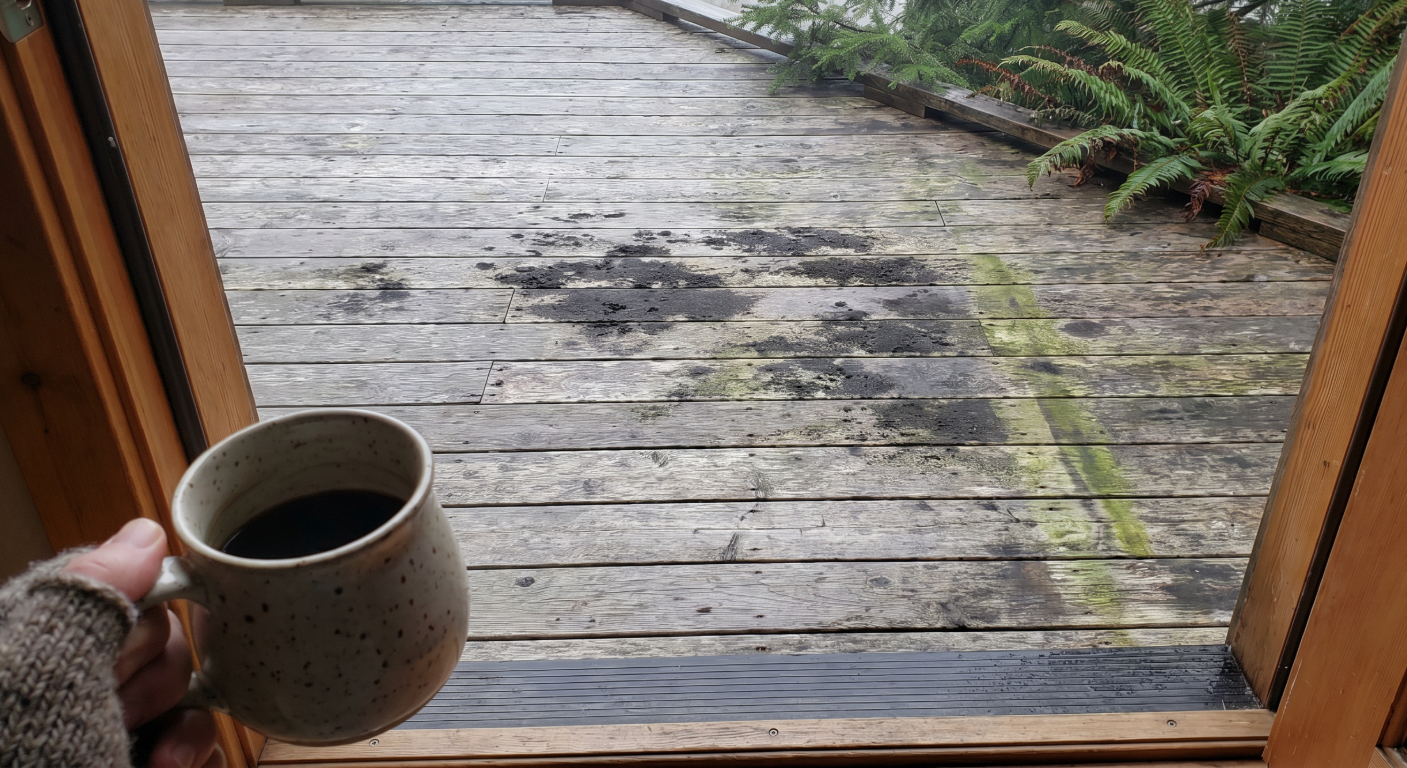
Mold is a fungus that feeds on organic material in the wood itself. It typically appears as fuzzy or slimy patches, often black, dark green, or grey. The U.S. National Institute of Environmental Health Sciences notes that mold tends to be raised, thicker, and greenish or black in colour, while mildew is typically powdery and rests flat on surfaces (NIEHS, 2024).
Mildew is mold's flatter cousin. It looks like a powdery, dry coating, usually grey, white, or light brown. It lives on the surface and is easier to remove than embedded mold.
Algae appears as a slick, green or yellow film. Unlike mold, algae is a plant and feeds on sunlight and moisture, not on the wood itself. Most common on shaded, north-facing decks.
Moss is a soft, green plant that grows in fuzzy clumps. Common under heavy tree cover, it can lift between deck boards if left to spread.
Quick identification guide:
- Fuzzy black or green patches → Mold (moderate to difficult to treat)
- Dry, powdery, flat coating → Mildew (easy to moderate)
- Slimy green film → Algae (easy)
- Soft green clumps → Moss (easy, but remove manually first)
This guide focuses on mold, but the same approach works for mildew and algae. Heavy moss should be physically removed before applying any cleaning solution.
Why Mold Grows on Deck Boards in Coastal British Columbia
Mold needs three things to thrive: moisture, organic material, and limited airflow. Greater Vancouver provides all three.
Constant moisture. The City of Vancouver records that November and December average roughly 182 mm of precipitation each (City of Vancouver, 2024). Wood is hygroscopic, meaning it absorbs water from the surrounding air. The Canada Mortgage and Housing Corporation identifies excess moisture as a primary driver of mold growth in homes and exterior building components (CMHC, 2018).
Organic debris. Fallen leaves, pine needles, and pollen create a layer that traps moisture against the wood and feeds mold spores. Tree-heavy neighbourhoods like Lynn Valley, Deep Cove, and Kerrisdale are particularly prone.
Shade and limited airflow. Decks that sit in perpetual shadow, against the north side of a home, or under dense tree canopy never get the direct sunlight needed to dry out.
Wood type matters. Untreated softwoods like cedar absorb moisture quickly and are most vulnerable. Pressure-treated lumber resists mold longer but is not immune. Capped composite is most resistant, but mold can still grow on dirt and pollen accumulated on the surface.
How to Remove Mold from Deck Boards: Step-by-Step
This process works for most cases of light to moderate mold on wood and composite decking. For mold covering more than 10 square feet, the U.S. Environmental Protection Agency recommends professional remediation (EPA, 2025).
What you will need: stiff-bristled deck brush (soft-bristled for composite), pump sprayer or watering can, garden hose, bucket, rubber gloves, safety goggles, an N95 mask, long-sleeved clothing, your chosen cleaning solution, and tarps to protect plants.
Step 1: Prepare the area. Remove all furniture and planters. Sweep the deck thoroughly. Wet down surrounding plants with water before you start, then cover them with tarps to prevent damage from cleaning solution overspray.
Step 2: Suit up. Put on rubber gloves, goggles, and an N95 mask. The U.S. Centers for Disease Control note that mold exposure can trigger symptoms including stuffy nose, coughing, wheezing, and skin or eye irritation, especially in people with asthma or mold allergies (CDC, 2024).
Step 3: Apply your cleaning solution. Apply generously using a pump sprayer. Work in sections of 100 to 200 square feet so the solution does not dry before you can scrub. Let it dwell for 10 to 15 minutes.
Step 4: Scrub with the grain. Using a stiff-bristled brush, scrub each board with the grain. Scrubbing across the grain can splinter cedar. For composite, use a soft-bristled brush to avoid scratching the cap layer.
Step 5: Rinse thoroughly. Rinse with a garden hose from one end to the other. Make sure all cleaning residue is washed away.
Step 6: Let it dry. Wait at least 48 hours of dry weather before sealing. Wood needs to drop below roughly 15 percent moisture content for finishes to bond properly.
Step 7: Inspect for residual stains. Some mold stains will remain visible after cleaning. We cover this in detail below.
Cleaning Solutions Compared
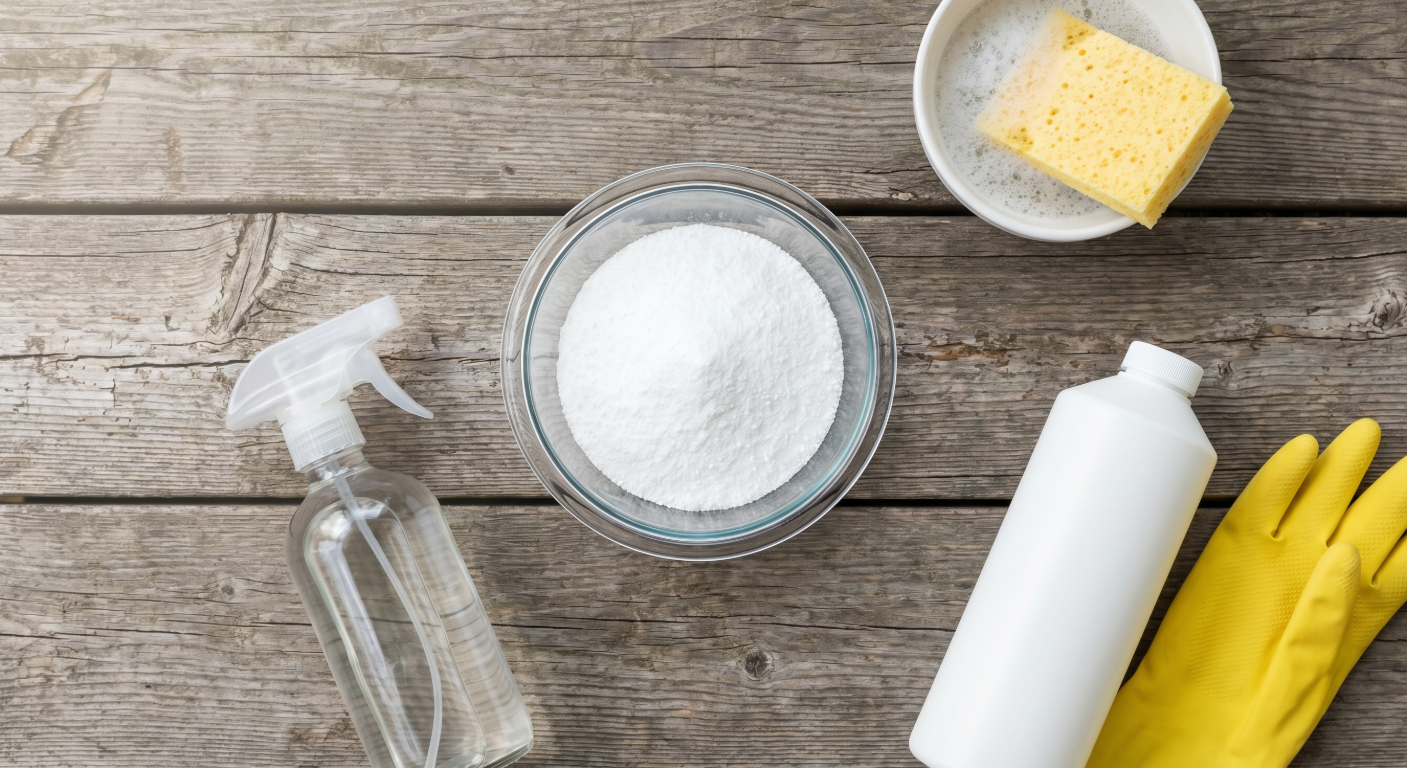
Sodium percarbonate (oxygen bleach) - recommended. This is the active ingredient in oxygen-based deck cleaners like OxiClean, Defy Wood Cleaner, and Restore-A-Deck. It is registered with the U.S. Environmental Protection Agency for mold and mildew removal. Mix 1 cup per gallon of warm water. It releases hydrogen peroxide on contact with water, which lifts mold from wood pores without damaging the lignin that holds the wood fibres together. Plant-safe and biodegradable.
White vinegar - for light surface mold only. Vinegar can kill light surface mold but cannot penetrate deep mold in porous wood. Mix equal parts vinegar and water. Best for sealed wood or capped composite.
Dish soap and water - gentlest option. For composite decks with light mold, mild detergent and warm water is often all you need. The EPA recommends scrubbing mold off hard surfaces with detergent and water, then drying completely (EPA, 2025).
Chlorine bleach - generally not recommended. Bleach breaks down lignin in wood, dries out the natural oils, corrodes metal fasteners, and lightens wood colour over time. The EPA explicitly advises against bleach as a routine practice for mold cleanup (EPA, 2025). On porous surfaces, bleach kills surface mold but leaves the roots in the wood, where they regrow. If you do use it on composite, the U.S. CDC recommends no more than 1 cup per gallon of water. Never mix bleach with ammonia-based cleaners - the combination produces toxic fumes.
Pressure Washing: When It Helps and When It Damages
Pressure washing is the fastest way to clean a deck. It is also the easiest way to damage one.
For wood decks, 500 to 1,200 PSI with a 40- or 60-degree fan nozzle is typically safe. Composite decks should never exceed roughly 1,500 PSI, and many manufacturers recommend a garden hose only. Hold the nozzle 12 to 18 inches from the surface and keep it moving.
Cedar is one of the most common deck materials in Vancouver and one of the easiest to damage with pressure washing. The fibres can lift and "fur" if hit too hard, leaving a rough surface that splinters easily. Always test in an inconspicuous area first.
Most composite decking manufacturers advise against high-pressure washing because it can permanently damage the cap layer. James Hardie similarly recommends gentle washing rather than high pressure on fibre cement siding (James Hardie Care Guide).
Most importantly: pressure washing alone does not kill mold. It physically removes surface growth but leaves spores embedded in the wood, leading to regrowth within weeks. Always combine pressure washing with sodium percarbonate or another cleaner. Our team uses controlled pressure washing only when conditions justify it, and pairs every job with a kill-step solution.
Soft Washing: The Method Most Homeowners Have Not Heard Of
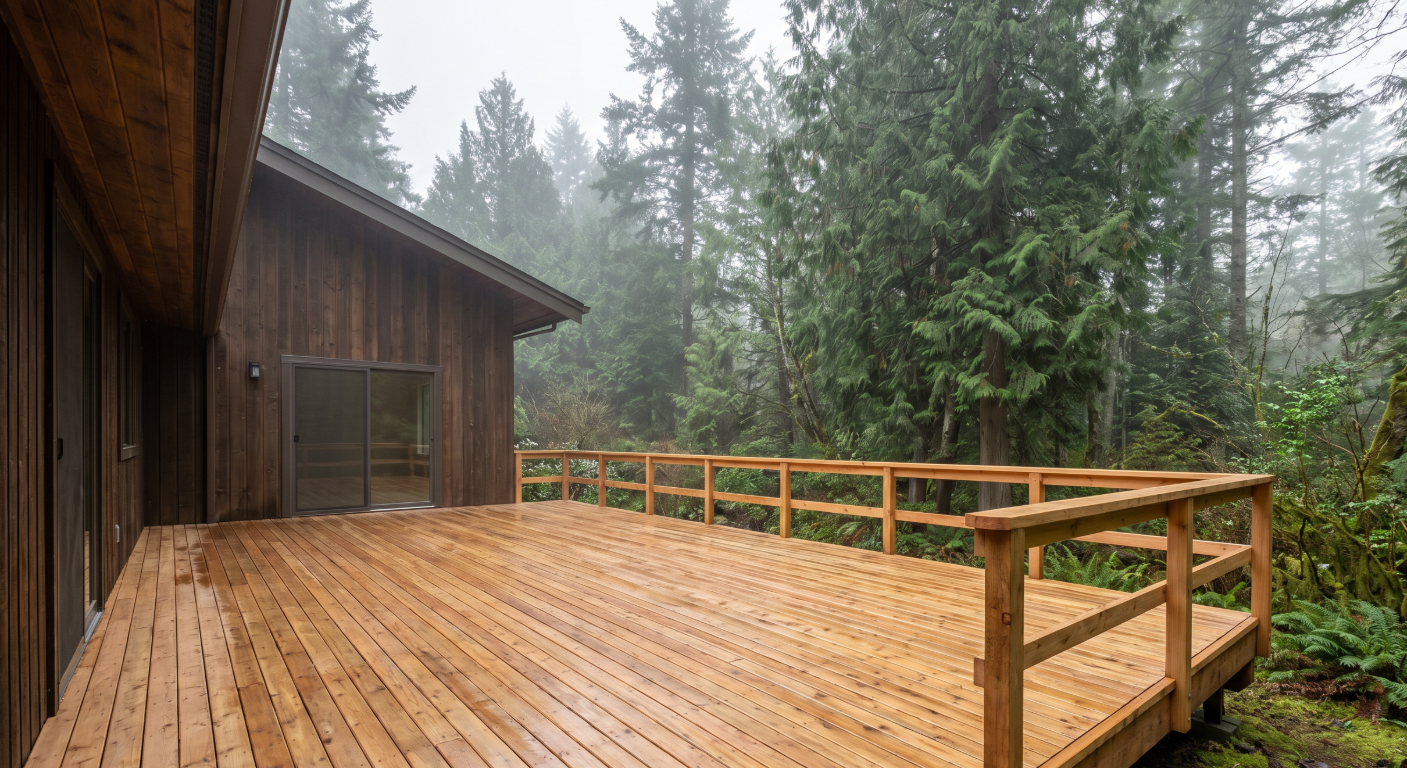
Soft washing uses low pressure (typically under 500 PSI) combined with a biodegradable cleaning solution to remove mold, mildew, and algae without the risk of damaging the wood. It is the method professional cleaners use for siding, stucco, roofs, and shaded decks.
The cleaning solution does the work, not the water pressure. It penetrates the wood pores and kills the mold at the root, which means cleaning lasts months longer than pressure washing alone. Soft washing is also the only practical method for cleaning capped composite without voiding manufacturer warranties.
If your deck has recurring mold every year, sits in deep shade, or is made of cedar or composite, soft washing is almost always the better choice.
Realistic Expectations on Stain Removal
Here is something most online guides do not tell you: cleaning a deck does not always restore it to like-new condition.
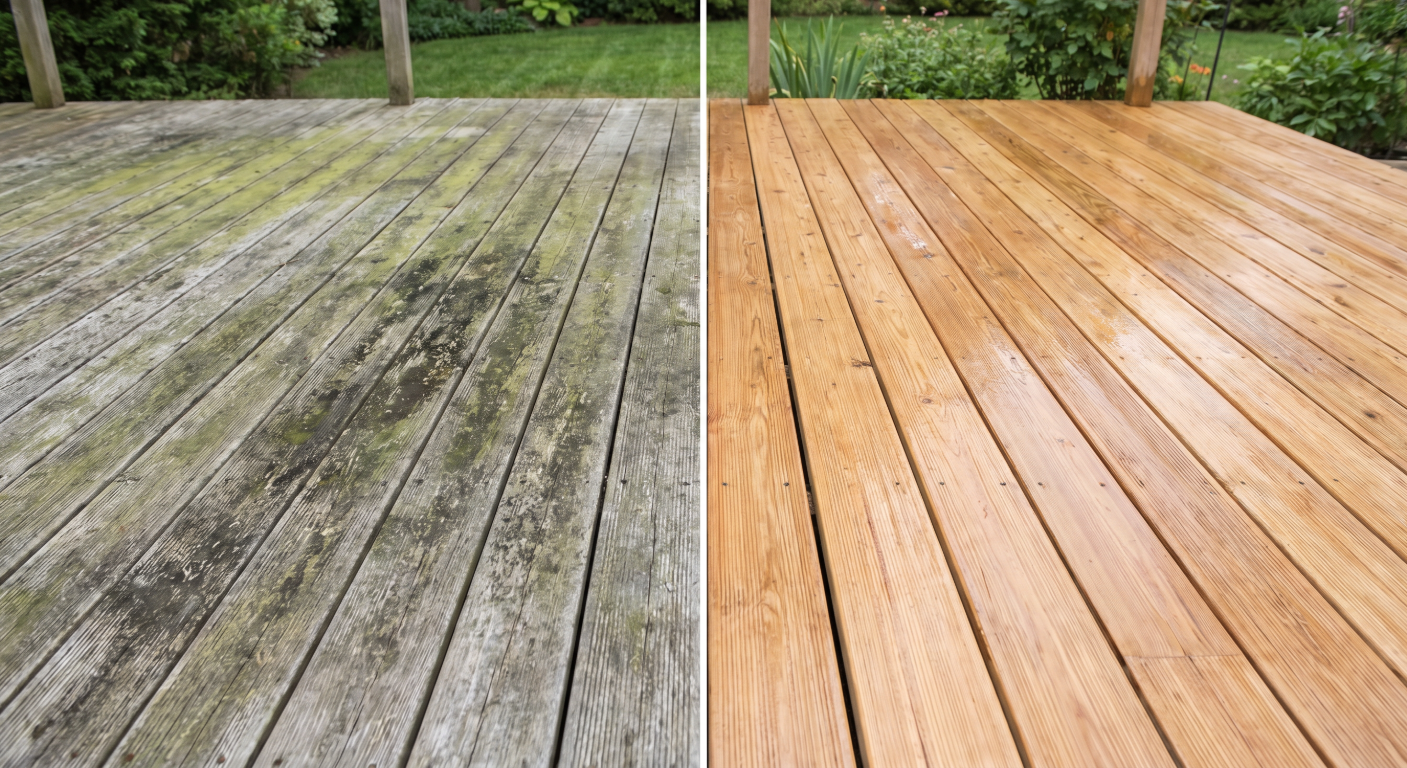
What cleaning will accomplish. Mold and mildew will be killed at the root if you use sodium percarbonate or a comparable solution. Surface dirt, organic debris, and most green algae stains will lift cleanly. The wood will look noticeably brighter, and slip hazards will be reduced.
What cleaning may not fully remove. Deep black mold staining, particularly on weathered cedar that has not been cleaned in years, can leave residual grey or black discolouration even after the mold itself is dead. Tannin staining from wet leaves and pine needles can also persist. Iron oxide stains from rusted nails or planters generally will not come out without specialised treatment.
Your three options for residual staining:
- Apply a wood brightener. An oxalic acid-based brightener neutralises the cleaner and lifts most surface discolouration. This is standard practice before re-staining.
- Lightly sand the surface. Sanding with 60- to 80-grit paper can remove most embedded staining but will require re-sealing or staining afterward.
- Stain over the discolouration. A solid-colour stain will hide residual staining entirely.
We always set expectations like this with our clients before we start work. Some stains lighten dramatically. Others remain visible after cleaning. Knowing this upfront is the difference between a satisfied homeowner and a disappointed one.
When to Call a Professional vs DIY
DIY deck cleaning makes sense for many homeowners. It is the wrong call in several specific situations.
DIY is reasonable when the mold covers less than 10 square feet (the EPA's recommended self-cleanup threshold), the deck is single-storey and easy to access, you have no respiratory issues, and the wood is structurally sound.
Call a professional when the mold covers more than 10 square feet (EPA, 2025), the deck is on the second storey or higher, the wood shows rot or soft spots, past DIY attempts have failed, you have asthma or a compromised immune system (CDC, 2024), or the deck is composite and still under warranty.
DIY cleaning typically costs $40 to $80 in product if you already own a brush and pump sprayer. Professional pressure washing or soft wash for a residential deck in Vancouver usually starts around $250 to $500 depending on size. The professional option includes the cleaning solution, equipment, and labour.
How to Prevent Deck Mold from Coming Back
Cleaning is only half the job. Without prevention, mold will return within months in Vancouver's climate.
Sweep regularly. Remove leaves, pollen, and debris weekly during the wet season. Use a putty knife or stiff brush to clear material from between deck boards.
Maintain proper drainage. Make sure your gutters are flowing properly. Overflowing gutters dump water directly onto deck surfaces. The Canada Mortgage and Housing Corporation lists poor drainage as a primary cause of moisture-related deterioration in homes (CMHC, 2018).
Improve airflow. Move planters, furniture, and rugs around periodically to prevent moisture from being trapped underneath.
Maximise sunlight. Trim back overhanging branches where possible. More direct sunlight means faster drying and less mold growth.
Seal and stain every two to three years. A quality deck sealer with mildewcide creates a moisture barrier. In Vancouver's wet climate, plan to re-seal every two to three years for softwoods like cedar, and every three to five years for pressure-treated lumber.
Annual maintenance calendar for BC decks
- Early spring (March): Sweep, clean, and inspect for damage
- Late spring (May–June): Apply sealant or stain if due
- Summer (July–August): Light cleaning, check for wear
- Fall (October–November): Deep clean, clear gutters, remove debris
- Winter: Sweep snow promptly with a broom (not a metal shovel)
Following this calendar can extend the life of a Vancouver deck by five to ten years.
Frequently Asked Questions
Does vinegar kill mold on deck boards?
Vinegar can kill light surface mold but does not penetrate wood pores deep enough to remove embedded mold. For wood decks, use a sodium percarbonate-based cleaner instead. Vinegar works best on sealed surfaces or capped composite.
Can I use bleach to clean my wood deck?
The U.S. Environmental Protection Agency does not recommend bleach as a routine mold cleaner because it does not penetrate porous materials like wood (EPA, 2025). Bleach also breaks down lignin in wood fibres, can corrode metal fasteners, and harms surrounding plants. Sodium percarbonate is a safer and more effective alternative.
How often should I clean my deck in Vancouver?
Most Vancouver decks need a thorough cleaning once a year, ideally in late spring or early fall. Decks under heavy tree cover or in deep shade often need two cleanings per year.
Will pressure washing damage my composite decking?
Yes, in many cases. Most composite manufacturers advise against high-pressure washing because it can permanently damage the cap layer. If you must pressure wash composite, keep PSI below 1,500 and use a fan nozzle held at least 12 inches from the surface.
Is black mold on my deck dangerous to my family?
Black mold on outdoor decks rarely poses the same indoor air quality risks as mold inside a home. However, the U.S. Centers for Disease Control note that mold exposure can trigger respiratory symptoms in sensitive individuals (CDC, 2024). Wear an N95 mask when cleaning.
How long does my deck need to dry before sealing?
Wait at least 48 hours of dry weather before applying any sealant or stain. The wood needs to drop below roughly 15 percent moisture content for finishes to bond properly.
Can mold come back after cleaning?
Yes, especially without prevention. Mold spores are always in the air. Without sealing, drainage improvements, and regular sweeping, expect mold to return within six to twelve months in coastal British Columbia.
Key Takeaways
- Vancouver's wet climate, with more than 1,100 mm of rain over 160-plus days per year, makes deck mold one of the most common property maintenance issues in the region (Environment and Climate Change Canada, 2024).
- Sodium percarbonate-based cleaners are the safest and most effective option for wood decks. Chlorine bleach is not recommended as a routine mold cleaner (EPA, 2025).
- Pressure washing alone does not kill mold. It removes surface growth but leaves spores embedded in the wood.
- Soft washing combines low pressure with a cleaning solution that kills mold at the root, and is the gold standard for shaded or composite decks.
- The EPA recommends professional cleanup for areas larger than 10 square feet (EPA, 2025).
- Some stains will lighten dramatically, but deep black mold and tannin staining may remain visible after cleaning.
- Prevention through sealing, drainage, and regular sweeping extends the life of a deck by years.
If your Vancouver deck has visible mold and you would rather not handle the job yourself, our team has cleaned more than 10,000 properties across the Lower Mainland, including North Vancouver, West Vancouver, Burnaby, and the Tri-Cities. Get a free quote and we will assess your deck, recommend the right method, and provide upfront pricing with no surprises.