.webp)
Soft Washing vs. Pressure Washing in Vancouver: Which Method Is Right for Your Home?
.png)
Why This Comparison Matters for Vancouver Homeowners
If your home exterior looks tired, stained, or covered in green growth, you have likely wondered whether soft washing or pressure washing is the right choice. Both methods clean exterior surfaces, but they work in very different ways and produce very different results.
After years of performing both services across the Lower Mainland, I have a clear perspective on when each method works best. I have also seen what happens when the wrong method is used on the wrong surface. The short answer is that soft washing is the better choice for most residential surfaces in Vancouver, while pressure washing is reserved for hard, durable surfaces like concrete and stone.
This guide breaks down both methods so you can make the right decision for your property.
What Is Soft Washing?
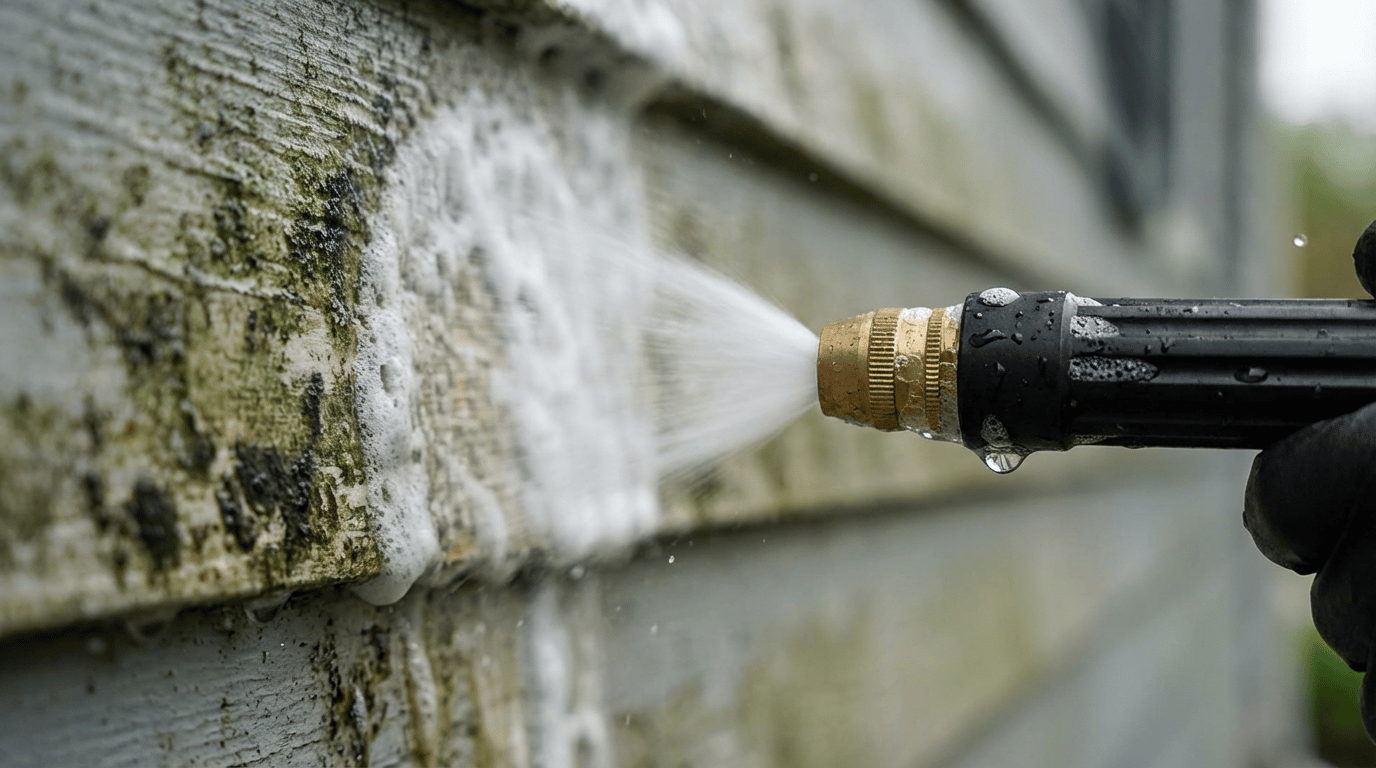
Soft washing is a low-pressure cleaning method that uses specialised cleaning solutions to remove dirt, algae, mould, and other organic growth from exterior surfaces. The water pressure stays below 500 PSI, which is gentle enough to avoid damaging siding, paint, or delicate finishes.
The cleaning solutions do the heavy lifting. They break down and kill organic matter at the root, which means the results last far longer than rinsing with water alone. Most soft wash solutions contain sodium hypochlorite, which breaks down into salt and water when exposed to sunlight (Wikipedia, 2025).
In my experience, a proper soft wash keeps surfaces clean for 12 to 24 months. I have seen homes that looked brand new a full year after treatment, even in Vancouver's damp conditions.
Surfaces That Benefit from Soft Washing
Soft washing is the safest and most effective option for:
- Vinyl siding
- Painted wood and trim
- Stucco and exterior plaster
- Hardie board and fibre cement
- Soffits, fascia, and railings
- Wooden decks and stairs
Our house washing service uses soft washing as the default method for all siding types. It is simply the safest way to clean without risking surface damage.
What Is Pressure Washing?

Pressure washing uses high-pressure water, typically between 1,300 and 3,100 PSI, to blast away dirt, grime, and stains from hard surfaces. The force of the water does the cleaning rather than chemical solutions.
This method works well on surfaces that can handle the impact. Concrete driveways, stone walkways, brick patios, and garage floors are all good candidates for pressure washing.
However, that same force creates serious risks on softer materials. Wood and aluminium siding should not face more than 1,500 PSI, and even vinyl siding can warp under excessive pressure (Consumer Reports, 2025).
Surfaces That Suit Pressure Washing
Pressure washing is the right tool for:
- Concrete driveways and sidewalks
- Brick and stone pathways
- Garage floors
- Patio pavers
- Parking areas and parkade surfaces
For these hard surfaces, the high pressure effectively removes oil stains, ground-in dirt, and heavy soiling that soft washing alone cannot budge.
The Key Differences: Soft Washing vs. Pressure Washing
.png)
Understanding the core differences helps you choose the right method. Here is a side-by-side breakdown:
Water Pressure
Soft washing operates at under 500 PSI. Pressure washing ranges from 1,300 to 3,100 PSI. That difference matters because higher pressure means higher risk of surface damage on anything other than concrete or stone.
Cleaning Method
Soft washing relies on chemical solutions that kill organic growth at the source. Pressure washing relies on water force to blast contaminants away from the surface. This is the most important distinction. Pressure washing removes what you can see, but soft washing eliminates the organisms causing the problem.
I have found this to be the single biggest factor in how long results last. When you only remove surface growth without killing the root system, it comes back within weeks.
How Long Results Last
Soft washing results typically last 12 to 24 months because the cleaning solution kills mould, algae, and moss spores. Pressure washing results on siding and exterior surfaces often fade within a few weeks to a few months because the organisms are displaced but not destroyed.
One of my most memorable projects showed this clearly. A client on the North Shore had a home that had not been cleaned in about 10 years. He was getting quotes for repainting that ranged into the tens of thousands of dollars. After soft washing every surface, from the siding and railings to the wooden steps and driveway, the transformation was incredible. His home looked almost brand new, and he saved between $30,000 and $40,000 compared to repainting.
Water Usage
Soft washing uses roughly 80% less water than pressure washing (Pumptec, 2025). In a city that values environmental responsibility, that difference adds up.
Risk of Damage
Pressure washing can strip paint, gouge wood, crack vinyl siding, and force water behind exterior cladding. That trapped moisture leads to mould growth inside walls, which is far more expensive to fix than the original cleaning. Soft washing carries virtually no risk of surface damage when performed by a trained professional.
Why Soft Washing Works Better in Vancouver's Climate
.png)
Vancouver receives over 1,167 mm of rain annually across roughly 166 rainy days, with an average humidity of 81% (Wikipedia, 2025). These conditions create the perfect environment for moss, algae, and mould to thrive on every exterior surface.
North-facing walls, shaded areas under tree canopies, and any surface that stays damp for long periods will develop green and black growth. This is not a sign of poor maintenance. It is simply what happens in the Pacific Northwest climate.
I have worked with homeowners and building owners throughout the city, tackling everything from siding and railings to soffits and delicate exterior finishes. After years of testing both methods, I can say with confidence that soft washing is the superior method for most Vancouver homes.
Moss and Algae Need Chemical Treatment
Pressure washing removes visible moss and algae from the surface. But it does not kill the spores embedded in the material. In Vancouver's wet climate, those spores regenerate quickly. Within weeks, the growth returns.
Soft washing solutions penetrate the surface and eliminate the organisms at their root. The treated surface stays cleaner because there are no living spores left to regrow. This is why I recommend soft washing every 1 to 2 years for most exterior surfaces in Vancouver.
If you want to learn more about the science behind organic growth on homes, read our guide on why moss and algae grow on Vancouver properties.
Delicate Materials Need Gentle Care
Many Vancouver homes feature wood siding, painted trim, stucco, and other materials that pressure washing can damage. I spent about a year experimenting and doing research before building my first soft wash system because I wanted to be absolutely sure I would never damage a property.
That careful approach paid off. From day one, my system worked without incident, and every project since has reinforced that low pressure combined with the right solutions delivers better results than brute force.
When to Choose Each Method for Your Home
The best approach for most Vancouver properties is a combination of both methods. Here is a practical breakdown of how we typically handle a full exterior cleaning job.
Use Soft Washing For
- All siding types (vinyl, wood, stucco, Hardie board, fibre cement)
- Soffits, fascia, and eaves
- Railings and trim
- Wooden decks and stairs
- Fences and pergolas
- Any surface with paint, stain, or a protective coating
Use Pressure Washing For
- Concrete driveways and sidewalks
- Stone and brick walkways
- Unfinished concrete patios
- Garage floors
- Commercial power washing applications on hard surfaces
Another project that shaped my perspective involved a four-story apartment building where the owners were convinced they needed pressure washing. I made a trip to the property and did sample soft washing in a few areas to demonstrate what could be achieved. Once they saw the results, they trusted the process. We completed the entire building with soft washing and the results spoke for themselves.
Cost Comparison: What to Expect in Vancouver
Professional exterior cleaning in Vancouver typically costs between $250 and $1,000 depending on the size of the home, number of stories, and condition of the surfaces. Soft washing and pressure washing are generally priced similarly for residential work.
The real cost difference shows up in long-term value. Because soft washing results last 12 to 24 months, you need the service less frequently. Pressure-washed siding may need retreatment within months, which doubles or triples the annual cost.
When you also consider the risk of damage from pressure washing, the math becomes even clearer. Repairing stripped paint, gouged siding, or water damage behind cladding is far more expensive than the original cleaning.
For a detailed look at what professional cleaning costs, see our guide on exterior cleaning vs. painting costs in Vancouver.
How WashTech Approaches Exterior Cleaning
At WashTech, we assess every property individually before recommending a cleaning method. Most residential house washing jobs use soft washing as the primary method, with pressure washing reserved for driveways, walkways, and other hard surfaces.
Every job includes:
- Surface assessment to choose the right method for each area
- Landscaping protection with pre-soaking and covering of plants
- Careful preparation including covering keyholes, vents, and fixtures
- Before and after documentation so you can see the results clearly
We carry full WorkSafeBC coverage and liability insurance for every project. Whether it is a single-story home in Burnaby or a multi-story building in North Vancouver, we bring the same level of care to every job.
We also offer window cleaning and gutter cleaning services that pair well with exterior washing for a complete property refresh.
Frequently Asked Questions
Is soft washing safe for all types of siding?
Yes. Soft washing is safe for vinyl, wood, stucco, Hardie board, fibre cement, and painted surfaces. The low pressure and biodegradable solutions clean without causing damage. I have soft washed hundreds of homes across Vancouver without a single incident of surface damage.
Can pressure washing damage my home?
It can if used incorrectly or on the wrong surface. High-pressure water can strip paint, gouge wood fibres, crack vinyl, and force moisture behind siding. For hard surfaces like concrete and stone, pressure washing is safe and effective when performed by a professional.
How often should I have my home exterior cleaned in Vancouver?
In Vancouver's climate, soft washing every 1 to 2 years keeps most homes looking great. Properties with heavy tree cover, north-facing walls, or limited sun exposure may benefit from annual cleaning. Soft washing works well at any time of year.
Does soft washing kill moss and algae permanently?
Soft washing kills existing moss, algae, and mould at the root, which prevents regrowth for 12 to 24 months. It does not prevent new spores from eventually settling on the surface, which is why periodic retreatment is recommended in Vancouver's wet climate.
What chemicals are used in soft washing?
The primary cleaning agent is sodium hypochlorite, combined with surfactants that help the solution cling to surfaces. These solutions are biodegradable and break down into salt and water when exposed to sunlight and oxygen. We always pre-soak and protect landscaping before any application.
Is soft washing or pressure washing better for the environment?
Soft washing uses approximately 80% less water than pressure washing and relies on biodegradable solutions. Both methods require careful handling of runoff, but soft washing has a smaller environmental footprint overall.
Can I pressure wash my own home?
Consumer pressure washers can remove surface grime, but they carry a high risk of damage if you use too much pressure or the wrong nozzle. They also do not kill organic growth, meaning results fade quickly. Professional soft washing delivers safer, longer-lasting results for a similar cost.
Key Takeaways
- Soft washing is the better choice for most Vancouver home exteriors. It kills organic growth at the root, lasts 12 to 24 months, and carries no risk of surface damage.
- Pressure washing is best reserved for hard surfaces like concrete driveways, stone walkways, and brick patios where the high pressure is needed and safe.
- Vancouver's wet climate makes soft washing especially effective because moss, algae, and mould need chemical treatment to prevent rapid regrowth (Wikipedia, 2025).
- The long-term cost of soft washing is lower because results last longer and there is no risk of expensive surface damage.
- A professional assessment ensures the right method is used for each surface on your property. Contact us for a free evaluation of your home.


I started WashTech in 2020 with a window cleaning kit and a straightforward goal. Build something reliable in a space full of inconsistency. Property owners across Vancouver kept telling me the same thing: contractors don't show up on time, don't communicate, and don't take pride in the work. That gap became WashTech.
Give us a call
604-757-2016
WashTech
.png)