 Aidan Bar-Lev-Wise
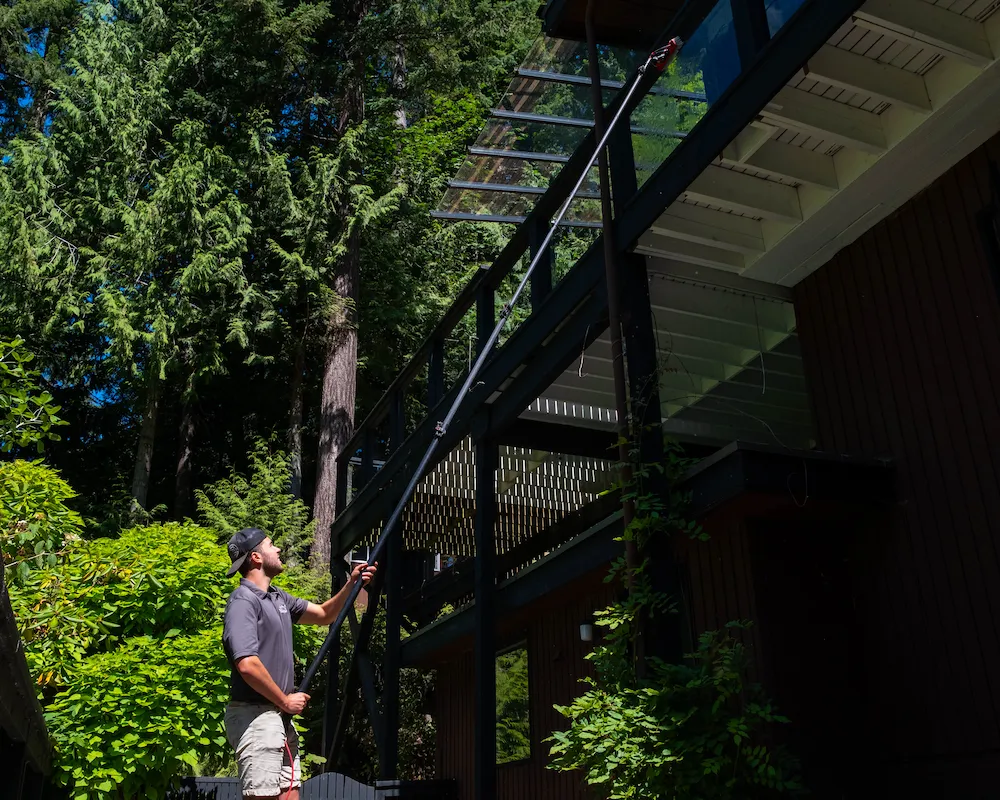
Water-fed pole window cleaning means scrubbing the glass from the ground with a soft brush on a long pole, then rinsing it with deionized water. Deionized water has had its dissolved minerals taken out, so it dries clear on its own, with nothing wiped on the outside of the glass. It's how our crew cleans exterior windows and frames on homes and buildings up to 4 storeys.
This guide explains how the method works, why deionized water matters even with Vancouver's soft tap water, and when we use a different approach.
What Is Water-Fed Pole Window Cleaning?
A water-fed pole is a lightweight telescoping pole with a soft brush head at the top and a thin hose running up its length. Deionized water flows through the hose and out of small jets in the brush, so the technician can scrub and rinse each window while standing on the ground.
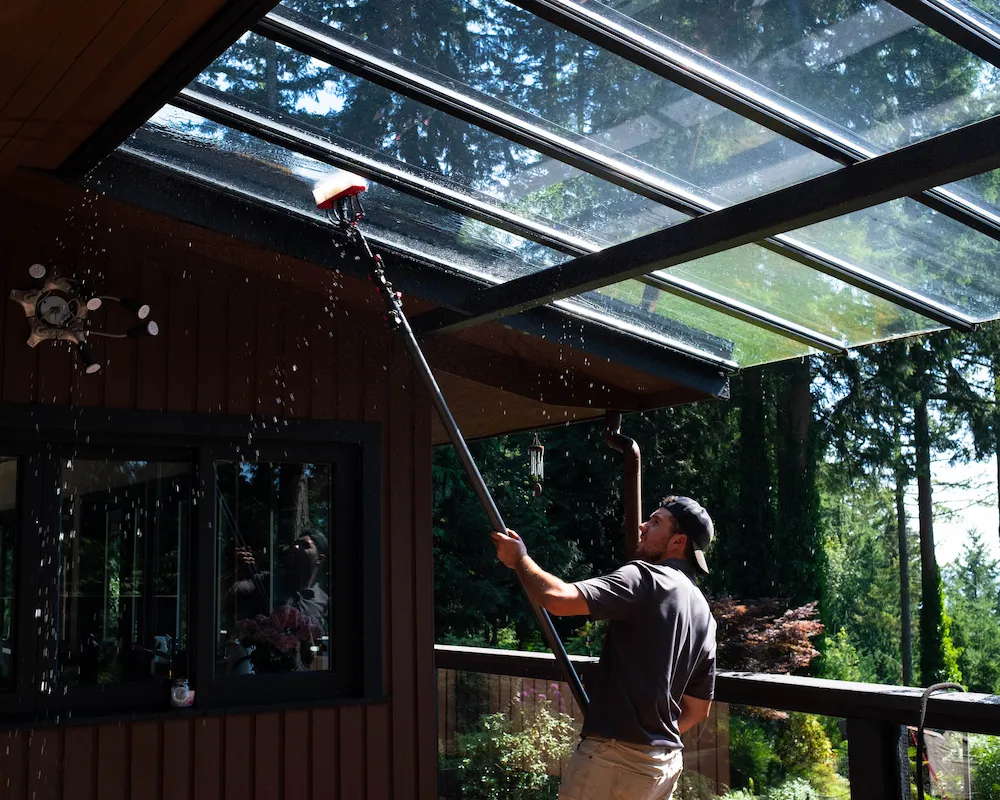
The brush loosens dirt, pollen and grime on the glass and the frame. The steady flow of deionized water carries it all away, and the window is left to dry without contact. Nothing is wiped on the exterior pane, which avoids the streaking that towel drying causes.
With the pole extended, our crew can clean windows up to 4 storeys high from the ground, so upper windows get the same attention as the ones by the front door.
What Deionized Water Is, and Why It Dries Without Spots
Deionized water is water with its dissolved minerals and salts removed, so there's almost nothing in it to stay behind on the glass as it dries. Regular tap water carries dissolved solids, and when a drop of tap water evaporates, those solids are what you see as a spot.
How tap water becomes deionized water
The water passes through a tank of ion exchange resin, small beads that capture the dissolved minerals and salts and swap them for the building blocks of water. What comes out the other side is close to pure water. We feed that water straight up the pole to the brush.
Because deionized water has almost nothing dissolved in it, it rinses dirt off the glass and leaves almost nothing behind as it dries. That's why the exterior pane can be left to dry on its own, with no final wipe.
Vancouver's water is soft, so why deionize it?
Vancouver's tap water is soft, and it still leaves something behind. Metro Vancouver's 2025 testing measured treated water hardness of about 20 mg/L in the Capilano and Seymour systems and 2.4 mg/L in the Coquitlam system, and total dissolved solids of 32 to 33 mg/L in all three (Metro Vancouver, 2026). Anything from 0 to 60 mg/L of hardness counts as soft water (USGS, 2026).
Soft water still carries dissolved solids, and those are, by definition, what's left behind when water evaporates. So those 32 to 33 milligrams per litre are what dry onto the glass when windows are rinsed with a garden hose. Deionizing takes them out, which is why a deionized rinse dries clear even on dark glass in low winter sun.
Why There's Nothing Left on the Glass
A water-fed pole clean finishes with a deionized rinse, so no minerals from tap water are left on the window as it dries. That's the difference you notice when low sun hits the glass and there are no spots to show.
The frames get the same treatment. The brush works along the frame and sill as it cleans the glass, and the rinse carries that dirt away too. Dirt left on the frame can run back onto clean glass in the next rain, so we clean both on every exterior visit.
What a Proper Exterior Clean Needs
The result of an exterior window clean depends on what's in the water and how the glass is rinsed. A garden hose sprays tap water that dries into spots.
A proper exterior clean needs three things:
- Deionized water, so the glass dries without spots
- A soft brush, so dirt and pollen lift off without scratching the glass or frame
- Safe reach, so the upper windows get the same attention as the ones by the front door
The water-fed pole brings all three together, handled properly by our crew. Our team works across Vancouver, Burnaby and the North Shore, and the same method applies whether it's a bungalow or a 4-storey strata building.
Cleaning From the Ground: Safer for the Crew and Your Home
Cleaning exterior glass from the ground cuts down on ladder work, and falls from ladders seriously injure hundreds of BC workers each year. In 2024, WorkSafeBC accepted 876 time-loss claims for injuries related to falls from ladders, 309 of them serious (WorkSafeBC, 2025).
It's also easier on your home. The pole reaches over shrubs, decks and slopes that would be awkward or risky to set a ladder on.
When We Use a Different Method
The water-fed pole is our standard for exterior glass, and there are a few jobs where we switch methods:
- Interior windows. Inside glass is cleaned by squeegee and microfibre, with the frames wiped down. No water-fed pole comes into your home.
- Paint, silicone or concrete on the glass. Anything stuck to the glass needs scrapers and a different process. That's post-construction window cleaning, and it's quoted separately.
- Water restrictions. Under Metro Vancouver's Stage 3 restrictions, washing glass and other hard exterior surfaces for appearance alone isn't allowed, with exceptions for health and safety and for preparing a surface for painting or similar treatment (Metro Vancouver, 2021). Our guide to pressure washing during water restrictions explains what each stage allows.
We also need water access. Most homes have an outdoor tap that does the job, so let us know where yours is when you book.
What to Expect When We Clean Your Windows
Every window cleaning starts with a walkthrough with you, to check the glass and frames and set expectations. Our technicians take before photos, clean the exterior glass and frames with the water-fed pole and deionized water, and take after photos. We finish with a walkthrough of the result.
WashTech is WorkSafeBC compliant and carries $2 million in liability insurance, and we take before and after photos on every job. Learn more about our window cleaning service, including window cleaning in Vancouver. For more on methods and timing, see our complete guide to window cleaning in Vancouver.
Frequently Asked Questions
Is deionized water safe for my plants and pets?
Yes. Deionized water is water with the dissolved minerals taken out, and nothing is added to it. It runs off the glass and into your garden like rain.
Do you need an outdoor tap?
Yes, we need access to water. Most homes have an outdoor tap we can connect to, so let us know where yours is when you book.
How high can a water-fed pole reach?
Our crew cleans windows up to 4 storeys high from the ground with a water-fed pole.
Does water-fed pole cleaning include the frames?
Yes. The brush cleans the frames and sills along with the glass on every exterior window, and the deionized rinse carries that dirt away.
Why isn't the outside of the glass wiped dry?
Deionized water dries without leaving minerals on the glass, so the exterior pane is left to dry without contact. Wiping it would only risk the streaks that towel drying causes.
Key Takeaways
- Water-fed pole window cleaning scrubs the glass and frames from the ground and rinses them with deionized water.
- Deionized water has its dissolved minerals removed, so it dries clear with nothing wiped on the glass.
- Vancouver's tap water is soft and still carries 32 to 33 mg/L of dissolved solids, which is what leaves spots after a hose rinse.
- Cleaning from the ground cuts down on ladder work and reaches windows up to 4 storeys high.
- Interior glass and stuck-on residue each call for a different method, and Stage 3 water restrictions pause cleaning glass for appearance.
If you'd like a clear and straightforward quote for your windows, contact WashTech and we'll get back to you quickly.