.webp)
Do Gutter Guards Need Cleaning? What Vancouver Homeowners Should Know
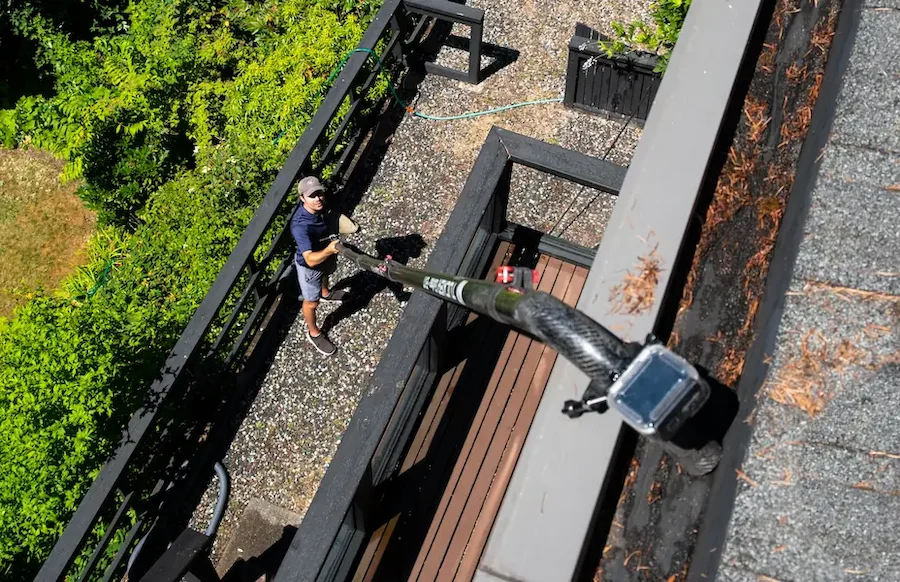
Yes, gutter guards need cleaning, usually less often than open gutters. Guards keep leaves out of the trough, and fir needles, moss, shingle grit and fine silt still collect on top of them and underneath. In Vancouver, where over half the year's precipitation falls between October and January, that buildup shows up as overflow right when your gutters are working hardest.
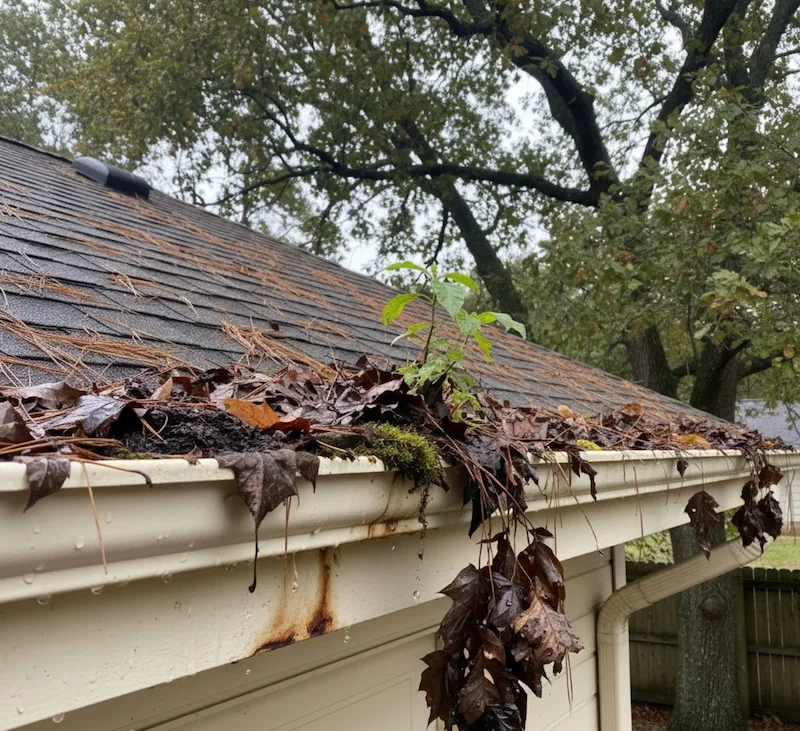
This guide covers what builds up on guards, why our rain season is the real test, how often to check them, how to clean them yourself, and whether guards are worth it for your home.
Do Gutter Guards Need Cleaning?
Gutter guards need cleaning because they block large debris and let small debris through. What gets through settles in the trough and the downspout, and what gets blocked sits on top of the guard until rain washes it off or it mats down. Either way, water eventually stops reaching the gutter.
The Government of Canada's flood guidance recommends gutter guards to keep debris out, and it also tells homeowners to check eavestroughs and downspouts at least twice a year, in fall and spring (Government of Canada, 2026). With guards on, the job becomes clearing a surface and checking underneath, which is lighter work than scooping out a full trough of leaves.
What gutter guards actually do
A gutter guard is a cover or insert that sits over or inside your gutter and filters what goes in with the rain. The goal is to keep leaves and larger debris out of the trough so water drains freely to the downspout.
That works well for broad leaves like maple and oak. It works less well for anything small, sharp or sticky, and Metro Vancouver has plenty of all three.
The main types, and where each one catches debris
Most guards you'll see on Vancouver homes fall into four groups. Each one fails in its own spot, so it helps to know which kind you have.
- Screen. How it works: a perforated sheet or grid over the gutter. Where debris collects: on top, and fine debris drops through the holes.
- Mesh (micro-mesh). How it works: a fine metal or plastic mesh over the gutter. Where debris collects: on top, as a mat that sheds water off the edge.
- Filter inserts (foam or brush). How it works: a block or brush that sits inside the trough. Where debris collects: inside the insert itself, which fills up and holds water.
- Reverse curve. How it works: a solid hood that curves water into a slot. Where debris collects: along the slot opening, where needles and grit lodge.
What Builds Up on and Under Gutter Guards in Vancouver
The debris that beats gutter guards here is small and steady: conifer needles, maple keys, moss and shingle grit. Much of it keeps landing long after the leaves are down, and a guard built to stop autumn leaves does very little against it.
Fir needles, maple keys and moss
Evergreen conifers shed some of their old foliage every year. It browns in mid to late summer and most of it washes out in wind and rain through fall and winter (Pacific Northwest Plant Disease Management Handbook, 2026). Around Vancouver, that means cedar and fir needles landing in gutters well after the leaves are down, and those needles slip through many screen and mesh openings. Maple keys land flat on mesh and knit together with needles into a mat that sheds rain over the edge of the gutter.
Moss is the other local problem. Moist, shady rooftops are ideal for moss growth (Oregon State University, 2026), and on those slopes it can grow thick. Clumps that break loose in storms often end up on the guard, where they hold moisture against it.
Shingle grit and sludge underneath
Asphalt shingles shed some of their mineral granules as they age (IKO, 2026), and new asphalt shingles shed loose surplus granules for the first few years, which often turn up in gutters and at the bottom of downspouts (IKO, 2012). 3M's standard #11 roofing granule grade is mostly between about 0.6 and 1.7 mm across (3M, 2025), and rain washes loose granules off the roof into the gutter. The ones that get past the guard mix with pollen, dust and fine needle pieces and settle in the bottom of the trough as a dark sludge.
You can't see that sludge from the ground because the guard covers it. It builds up for a few seasons, then shows up as a gutter that overflows even though the guard looks clear. Checking underneath is the easiest step to skip.
Why Vancouver's Rain Season Is the Real Test
Vancouver's gutters are tested by rain volume. Snow barely matters here. Environment and Climate Change Canada's 1991 to 2020 normals for Vancouver International Airport record 1,159.5 mm of precipitation a year and only 36.6 cm of snow (Environment and Climate Change Canada, 2026).
A lot of gutter advice is written for places with heavy snow and ice. Here, the thing to plan for is a long run of heavy rain.
Over half the year's precipitation in four months
The same station records about 645 mm of precipitation from October through January, roughly 56% of the annual total. November, December and January each average between 172 and 175 mm, the wettest stretch of the year (Environment and Climate Change Canada, 2026).
Those months line up with leaf season. October is when precipitation more than doubles, from 51.9 mm in September to 123.9 mm (Environment and Climate Change Canada, 2026). The City of Vancouver published its 2025 leaf collection notice in mid-October as leaves began to pile up, and said its city-wide street leaf clearing would start in mid-November (City of Vancouver, 2025). So your guards take their heaviest load of debris and their heaviest load of water in the same few weeks.
What happens when a matted guard meets a November storm
A guard covered in a wet mat of needles and leaves behaves like a roof. Rain runs across the top and pours straight over the front edge.
That water lands where the downspout was supposed to carry it away from:
- Siding and trim take a steady sheet of water, which stains paint and soaks wood fascia boards.
- The ground at the foundation stays saturated. The Government of Canada recommends using a downspout extension to direct water at least 2 m (6 ft.) from the foundation where possible (Government of Canada, 2026), and overflow skips that step entirely.
- The gutter itself carries the weight of wet debris, and over time the hangers loosen and sections pull away from the fascia.
None of this is dramatic on day one. It adds up over a few wet seasons, which is why a quick look each fall is worth the effort. Our guide to what happens if you don't clean your gutters follows that water further.
How Often Do Gutters with Guards Need Cleaning?
Most homes with gutter guards need a check at least twice a year, in fall and spring, matching the Government of Canada's baseline for all eavestroughs (Government of Canada, 2026). The trees around your home decide whether that's enough.
A schedule based on what grows over your roof
Use this as a starting point, then adjust after you've seen what your guards collect in a year.
- Few or no trees nearby. Suggested check: twice a year, fall and spring. Why: mostly grit and wind-blown debris.
- Deciduous trees overhead (maple, oak, birch). Suggested check: fall and spring, with the fall check timed for once most leaves are down. Why: leaf mats form on top of the guard right before the wettest months.
- Conifers overhead (fir, cedar, pine). Suggested check: fall and spring, plus a mid-winter check around January and after big storms. Why: needle drop runs through fall and winter, and needles slip through many guards.
- Mossy roof or shady north slope. Suggested check: fall and spring, and check the guard surface after big storms. Why: moss clumps land on guards and hold water.
The Government of Canada also advises checking more often after a severe storm, heavy rain or high winds (Government of Canada, 2026). In Vancouver, November averages 174.6 mm of precipitation, so plan on at least one extra look that month. For homes without guards, our guide to how often to clean gutters sets out a season-by-season schedule.
Signs your guards need attention now
You can spot most of these from the ground during a rainfall:
- Water sheeting over the front of the gutter in the middle of a run, away from the corners
- A downspout that drips or runs weakly while the gutter above it overflows
- Plants, moss or seedlings growing out of the gutter line
- Guards sagging, lifting or separating from the gutter edge
- Streaks or dirty water marks on the siding below the gutter
- Puddles or washed-out soil along the foundation after rain
If you see any of these, especially water sheeting over the edge, the guard surface or the trough underneath needs clearing.
How to Clean Gutter Guards
Cleaning gutter guards means clearing the top surface first, then checking the trough and downspouts underneath. Work only from a stable, level setup, and leave anything above a single storey to a crew with the right equipment.

From the ground or a single-storey ladder
For a one-storey home with guards you can reach safely:
- Set up safely. Use a sturdy ladder on firm, level ground, keep three points of contact, and have someone hold the base.
- Clear the surface. Brush or scoop the needles, leaves and moss off the top of the guard by hand. Work away from the downspout so debris doesn't wash into it.
- Rinse gently with a garden hose. A low, steady flow shows you where water gets in and where it runs off the edge. Use a garden hose only, and keep the flow gentle so you don't bend the mesh.
- Check the downspout. If water isn't draining properly, use a garden hose to loosen debris in the downspout, as the Government of Canada suggests (Government of Canada, 2026).
- Look for damage. Note loose clips, gaps at the corners and sections that have lifted, and fix or flag them before the wettest months.
When the guards have to come off
If water still overflows after the surface is clear, the problem is underneath. The sludge in the trough and packed needles in the outlets usually means lifting or removing sections of the guard.
That step takes more care, since guards clip, screw or slide into place differently and bend easily. It's also where DIY cleaning usually stops, because it means working along the whole run of gutter at height.
Are Gutter Guards Worth It?
Gutter guards are worth it on many Vancouver homes, especially under broadleaf trees, because they cut down how much debris reaches the trough. They're a maintenance tool, and they work best when someone still checks and clears them on a schedule.
Where they earn their keep
Guards make the most sense when:
- Large-leaf trees drop into the gutters every fall
- The home is two storeys or more and every cleaning is a bigger job
- You'd like fewer full cleanouts and a lighter seasonal check in between
They make less sense on a home surrounded by fir and cedar, where needles get through many guard types and you'll still be cleaning underneath. On those homes, it pays to compare guard types carefully before buying.
Downspout baskets: the smaller fix
A downspout basket (also called a gutter basket or strainer) is a small cage that sits in the opening where the gutter drains into the downspout. It stops debris from going straight down the pipe, where clogs are hardest to reach.
We install downspout baskets as an add-on when we clean gutters. Baskets protect the downspouts, and the gutters themselves still need routine cleaning to keep water flowing. For many homes, open gutters with baskets and a regular cleaning schedule are all they need.
How we handle gutters with guards
When our crew cleans gutters that have guards, we clear the top of the guard, check underneath where we can reach, test the downspouts and look for loose or damaged sections. If guards need to come off for a full cleanout, that's an add-on we explain and quote before we start. Nothing about the job should come as a surprise.
You'll see exactly what was done, because we take before and after photos on every job. Our gutter guard cleaning service covers screens, mesh, filter inserts and reverse-curve systems, and it's part of our full gutter cleaning service for homeowners and property managers across Metro Vancouver, with its own page for gutter cleaning in Vancouver.
WashTech is registered with WorkSafeBC and carries $2 million in liability insurance, so work at height is handled properly from start to finish. If your roof is steep, access is tight, or you'd rather no ladders were used, our ladder-free gutter cleaning is worth a look. For timing, our guide to gutter cleaning before winter walks through what to book ahead of the rainy season.
Frequently Asked Questions
Can gutters still clog with gutter guards?
Yes. Fine debris like conifer needles, shingle grit and silt gets past many guards and settles in the trough and downspouts. Leaves and moss can also mat on top of the guard, so rain runs straight off the front edge.
Do gutter guards work in heavy rain?
Clean, well-fitted guards let rain into the gutter as designed. A guard covered in wet leaves or needles sheds water over the front edge, and that's most likely in Vancouver's wet season, October through January, and most of all from November through January.
How often should gutters with guards be cleaned in Vancouver?
At least twice a year, in fall and spring, is the baseline the Government of Canada recommends for all eavestroughs. Time the fall check for once most leaves are down. Homes under fir or cedar should add a mid-winter check around January, and another after big winter storms.
Do I still need to clean my downspouts if I have gutter guards?
Yes. Fine debris that passes through a guard ends up in the downspout, which is the hardest part of the system to clear once it packs. A downspout basket at the outlet helps, and the downspout still needs a check each season.
How do I know which type of gutter guard I have?
Look at the gutter from a ladder or an upstairs window. A flat grid is a screen, a fine fabric-like surface is mesh, a solid hood with a slot along the front is a reverse curve, and foam or bristles inside the trough are filter inserts.
Key Takeaways
- Gutter guards need cleaning, usually less often than open gutters, because fine debris gets past them and leaves or needles mat on top.
- Vancouver's test is rain: about 56% of the year's precipitation falls from October through January, overlapping the months the leaves come down.
- Check guarded gutters at least twice a year, in fall and spring, and more often under fir, cedar or heavy tree cover.
- Clear the top first, then check underneath and in the downspouts, which is where most hidden clogs sit.
- Guards and downspout baskets reduce the work, and a regular cleaning schedule is still what keeps water flowing.
If you'd like a clear and straightforward quote for gutters with guards, contact WashTech and we'll usually get back to you within 24 hours.


I started WashTech in 2020 with a window cleaning kit and a straightforward goal. Build something reliable in a space full of inconsistency. Property owners across Vancouver kept telling me the same thing: contractors don't show up on time, don't communicate, and don't take pride in the work. That gap became WashTech.
Give us a call
604-757-2016
WashTech
.png)