.webp)
What Happens If You Don't Clean Your Gutters? A Vancouver Homeowner's Guide
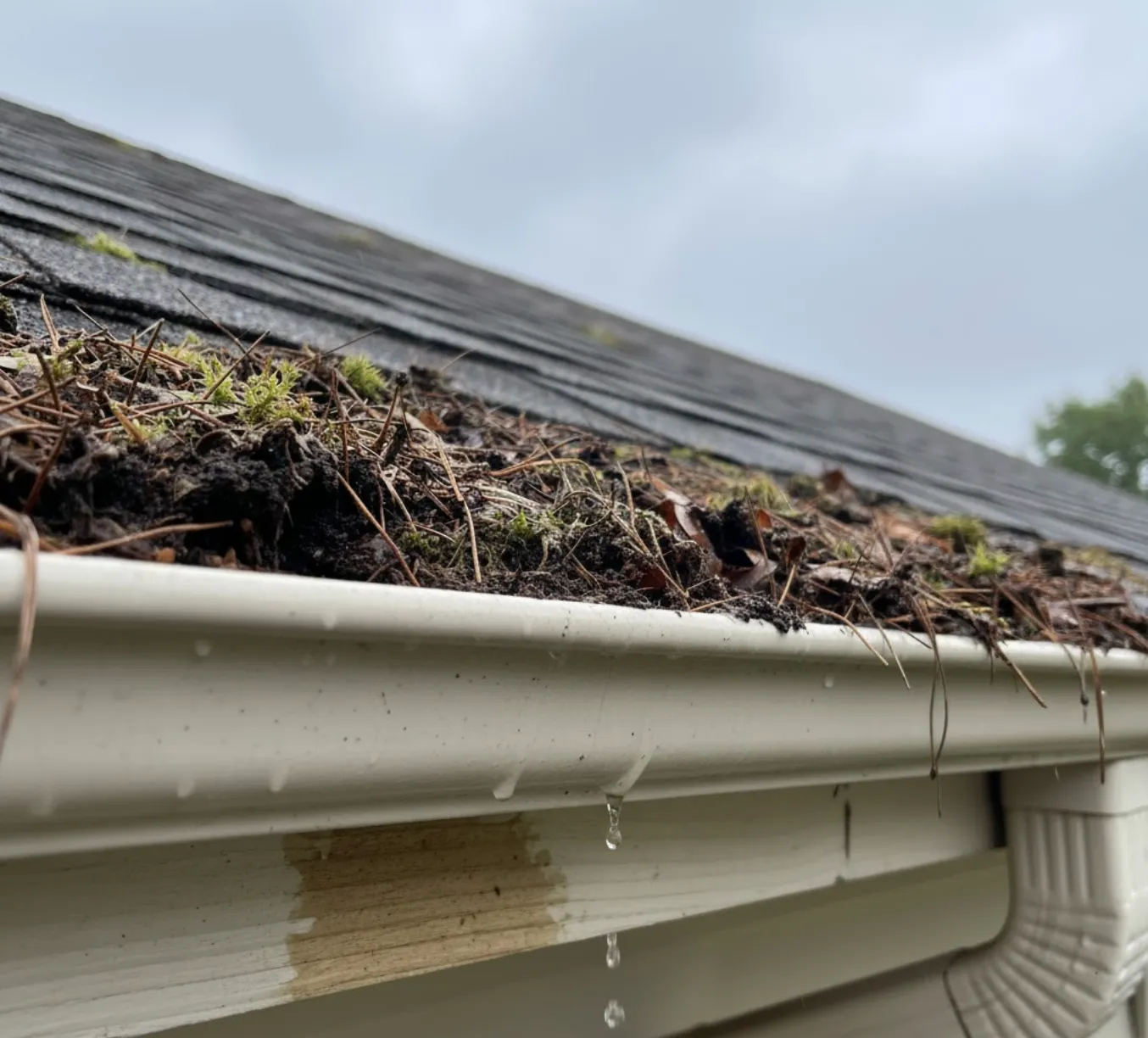
If you don't clean your gutters, rainwater stops going where it should and finds the next place to go. It spills over the edge, soaks the fascia and siding, pools against the foundation, and over time works its way toward the basement. None of it happens overnight, and all of it starts with a gutter that's full.
This guide follows the water from the roofline down, explains why Vancouver homes feel it sooner, and shows how to keep a clogged gutter from turning into a bigger job.
What Happens If You Don't Clean Your Gutters?
A clogged gutter can't carry water to the downspout, so the water overflows and lands on the parts of your home the gutter was built to protect. The Government of Canada describes the job of a working system plainly: when properly installed and maintained, eavestroughs and downspouts "can mitigate water damage by capturing and directing the flow of water away from your home's exterior walls and foundation" (Government of Canada, 2026).
When the gutter is full, that protection switches off. Here's where the water goes instead.
- Over the front edge of the gutter. What it does over time: soaks the fascia board behind the gutter and the soffit under the eave. The first sign you'll notice: peeling paint or dark staining along the roofline.
- Down the face of the house. What it does over time: streaks siding, trim and windows. The first sign you'll notice: dirty vertical stripes below the gutter.
- Onto walkways and steps. What it does over time: keeps surfaces wet and slick. The first sign you'll notice: green or slippery patches below one spot.
- Into the ground at the foundation. What it does over time: saturates the soil against the basement wall. The first sign you'll notice: puddles or washed-out soil along the house.
- Into a blocked downspout. What it does over time: backs up into the gutter, adding weight. The first sign you'll notice: a downspout that trickles while the gutter overflows.
Where the Damage Starts: the Roofline
The roofline takes the first hit because the overflow starts there. Water that should be running along the trough spills over the lip and runs down the wood the gutter is fastened to.
Fascia and soffits
The fascia is the board that runs along the roof edge, and the gutter is mounted to it. When a gutter overflows again and again, that board stays wet through a whole rainy season, and wet wood softens, stains and eventually rots.
The soffit, the panel under the overhang, often catches the same water. Peeling paint and dark streaks along the roofline are usually the first visible clue.
The gutter itself
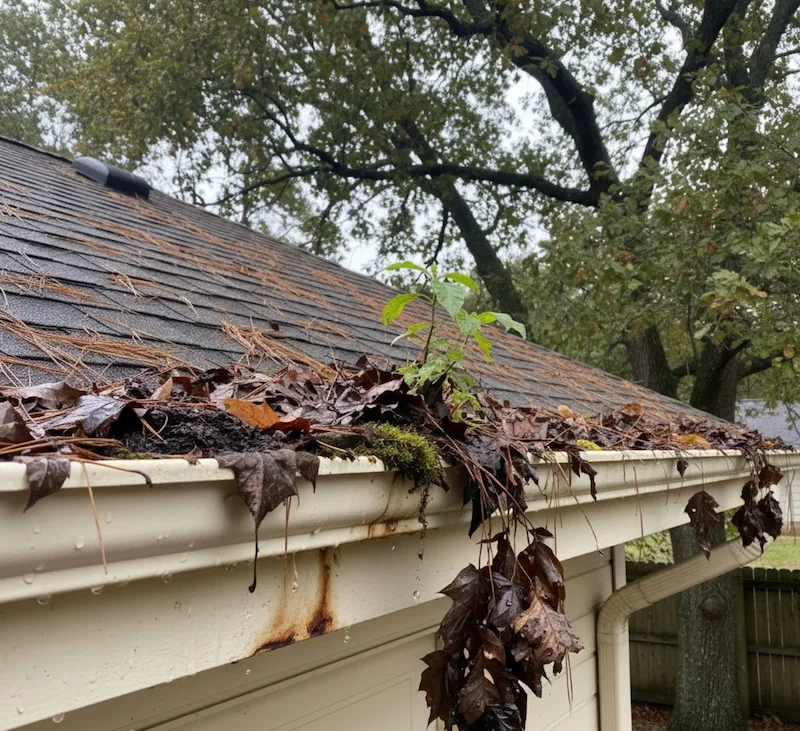
A gutter full of wet leaves, needles and silt is heavy, and it gets heavier every time it rains. Over time the hangers loosen, sections sag, and the gutter starts pulling away from the fascia.
A sagging section holds even more water, which adds more weight. That's how a gutter goes from clogged to falling apart.
Where It Goes Next: Walls, Windows and Walkways
Once water runs over the gutter edge, it falls straight down the face of the house. Siding, trim and window frames get a steady sheet of water in every storm, and the dirt it carries leaves streaks that ordinary rain rarely would.
The same water lands on whatever sits below: steps, patios, walkways, garden beds. Surfaces that stay wet all season turn slick, and soil in the beds washes out from the spot where the overflow hits.
Where It Ends Up: the Foundation and Basement
The foundation is where overflow does its slowest and most serious work. The Government of Canada notes that over time, cracks can form in a foundation "and allow rain, ice and snowmelt to seep inside" (Government of Canada, 2026). A gutter that dumps water against the wall all winter gives that water every chance to find them.
The same guidance ties a dry home to a healthy one, noting that it helps prevent "humidity, mould growth and pests" (Government of Canada, 2026).
Why 2 metres from the foundation matters
The whole point of a downspout is distance. The Government of Canada recommends using a downspout extension to direct water toward a well-drained part of the yard, at least 2 m (6 ft.) from the foundation where possible (Government of Canada, 2026).
An overflowing gutter skips that step. The water comes down right beside the wall, which is the one place it shouldn't land.
Clogged downspouts: the hidden half of the problem
A clogged downspout can be the real reason a gutter overflows. Debris packs at the top of the pipe or at a bend, water backs up into the gutter, and the gutter overflows even when it looks mostly clear.
You can spot it during a rainfall: the gutter spills over near the downspout while the bottom of the downspout barely runs. Clearing the gutter alone won't fix it. The downspout has to be cleared too.
Why Vancouver Homes Feel It Faster
Vancouver homes feel a clogged gutter faster because of how much rain arrives, and when. Environment and Climate Change Canada's 1991 to 2020 normals for Vancouver International Airport record 1,159.5 mm of precipitation a year, with about 645 mm of it falling from October through January (Environment and Climate Change Canada, 2026).
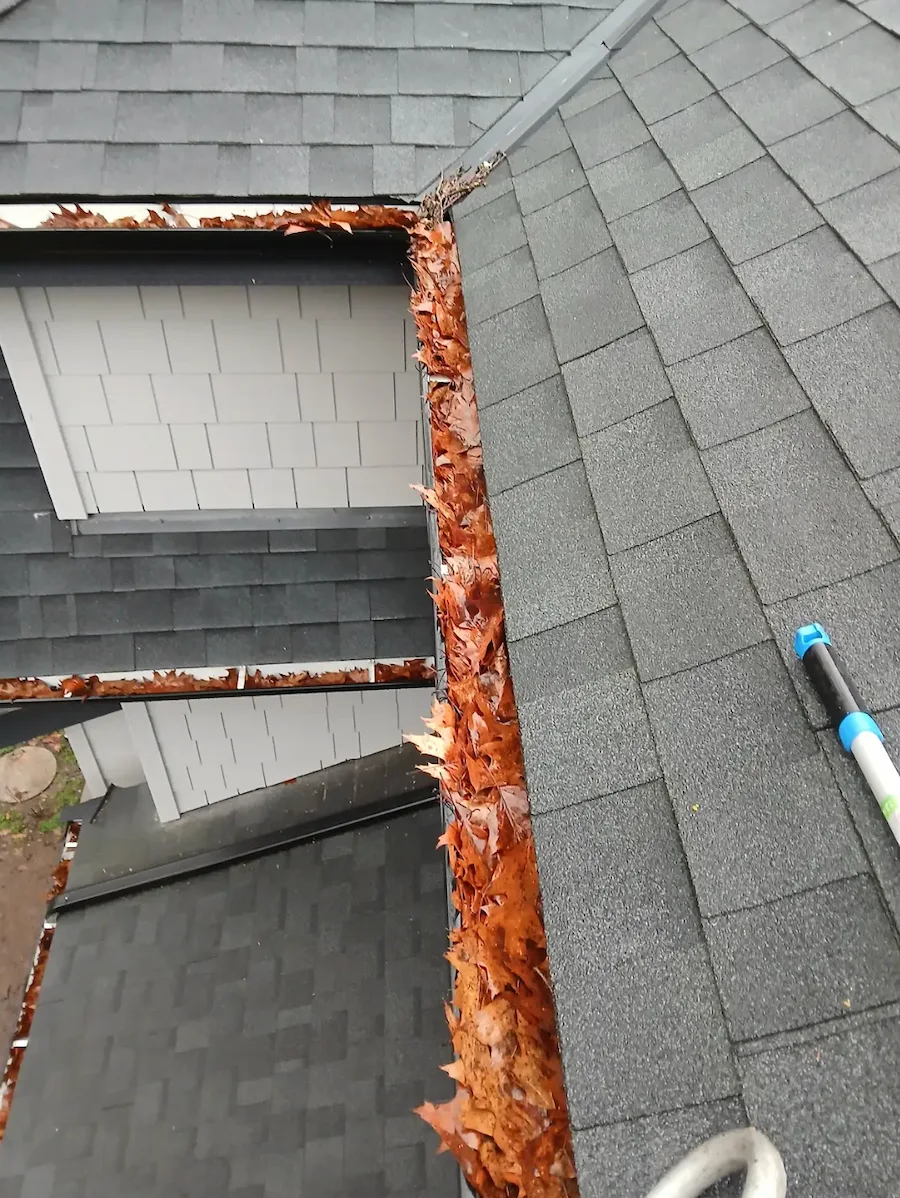
Fall is also when the leaves and needles come down, so a gutter that fills in October faces months of heavy rain before it gets a break.
Ice dams, a big topic in colder parts of Canada, are a smaller concern here. The same station averages 36.6 cm of snow a year, so in Vancouver the thing to plan for is steady rain.

What We Found at One New Homeowner's House
One of our jobs shows how far it can go. New homeowners were moving in, and the gutters were clogged and falling apart. Our crew cleared out the gutters and repaired some downspouts to prevent further damage.
In general, that's the pattern we see when gutters have been left for a while. The debris comes first, then the weight, then sections pulling loose and downspouts that no longer carry water where it needs to go. Another Vancouver homeowner described Aidan's visit in a review of our work: "He repaired and cleaned my gutters."
We take before and after photos on every job, so homeowners can see exactly what was in their gutters and what we did about it.
How to Keep It from Getting That Far
Regular cleaning helps keep a gutter from reaching the point where it overflows. The Government of Canada's baseline is to check eavestroughs and downspouts at least twice a year, in fall and spring, and more often after a severe storm, heavy rain or high winds (Government of Canada, 2026).
Watch for these signs between cleanings:
- Water spilling over the gutter edge during a normal rainfall
- A downspout that drips or trickles while the gutter above it overflows
- Plants, moss or seedlings growing out of the gutter
- Sections that sag or pull away from the roofline
- Streaks on the siding or peeling paint along the fascia
- Puddles or washed-out soil along the foundation
Our guide to how often to clean gutters sets out a season-by-season schedule, and our roof gutter cleaning guide covers why gutters clog and safe cleaning methods. For timing, see our page on gutter cleaning before winter. If you have gutter guards, our guide to whether gutter guards need cleaning explains what builds up on and under them.
When you'd rather have it handled properly, our gutter cleaning service clears every trough and flushes and tests every downspout across Metro Vancouver, including gutter cleaning in Vancouver. WashTech is registered with WorkSafeBC and carries $2 million in liability insurance.
Frequently Asked Questions
Can clogged gutters cause leaks inside the house?
They can. Overflow keeps the roofline and exterior walls wet, and water pooling at the foundation can find its way through cracks. The Government of Canada notes that foundation cracks can let rain seep inside, and it separately recommends directing water well away from the house.
Can clogged gutters cause basement flooding?
Clogged gutters raise the risk by dropping water right beside the basement wall. A working gutter and downspout, with an extension, carry that water at least 2 m (6 ft.) from the foundation where possible, which is the distance the Government of Canada recommends.
Do overflowing gutters always mean a clog?
Not always. A clog in the gutter or the downspout is the first thing to check. If a gutter still overflows after it's been cleaned, it may be undersized for the roof, or the slope or downspout may need a look. The Government of Canada suggests upgrading to larger eavestroughs or downspouts if they "consistently overflow during rainstorms, even with regular maintenance."
Is gutter cleaning necessary if there are no trees near my house?
Yes, just less often. Wind carries leaves and needles from down the street, moss grows on shaded roofs, and roof grit washes into the trough when it rains. A fall and spring check is still the baseline.
How long can I leave my gutters before they cause damage?
There's no fixed number, because it depends on how much falls into them. A gutter under a big tree can fill in a single fall. Checking in fall and spring, and after big storms, keeps you ahead of it.
Key Takeaways
- A clogged gutter sends water onto the fascia, siding, walkways and foundation, the parts of your home it's meant to protect.
- The foundation takes the slowest and most serious damage, which is why downspouts should discharge at least 2 m (6 ft.) away where possible.
- A clogged downspout can be the hidden cause of an overflowing gutter.
- In Vancouver, about 645 mm of precipitation falls from October through January, so gutters need to be clear once the leaves are down, before the wettest months.
- Checking gutters and downspouts in fall and spring, and after big storms, keeps small clogs from becoming bigger repairs.
If you'd like a clear and straightforward quote, contact WashTech and we'll usually get back to you within 24 hours.


I started WashTech in 2020 with a window cleaning kit and a straightforward goal. Build something reliable in a space full of inconsistency. Property owners across Vancouver kept telling me the same thing: contractors don't show up on time, don't communicate, and don't take pride in the work. That gap became WashTech.
Give us a call
604-757-2016
WashTech
.png)