.webp)
How Often to Clean Gutters in Vancouver: A Season-by-Season Guide
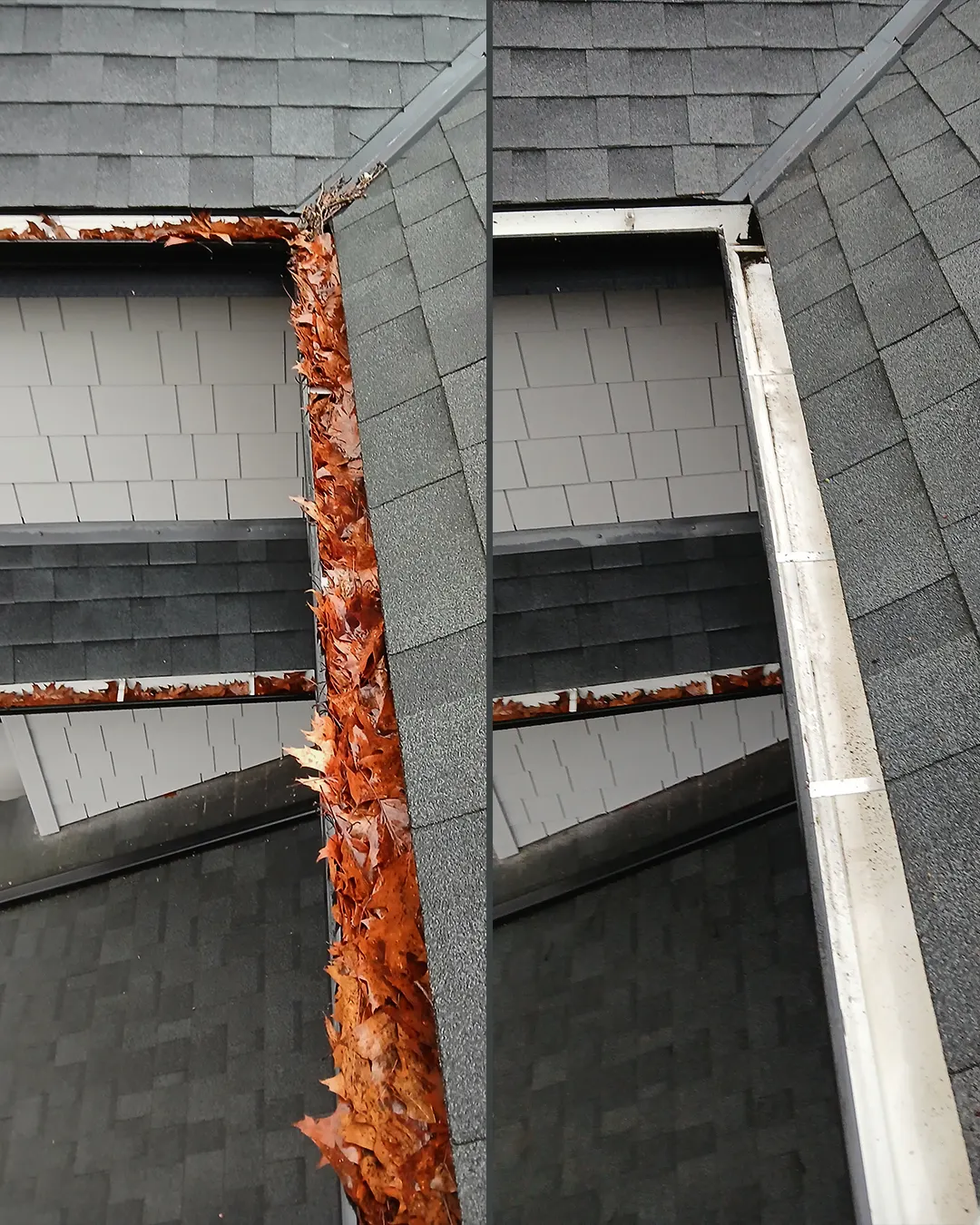
How often to clean gutters in Vancouver comes down to a simple rule: at least twice a year, once in late fall and once in spring. Homes under heavy fir or cedar cover need a third cleaning in mid-winter, plus a check after big storms. Our rain season is long and heavy, and the schedule is built around it.
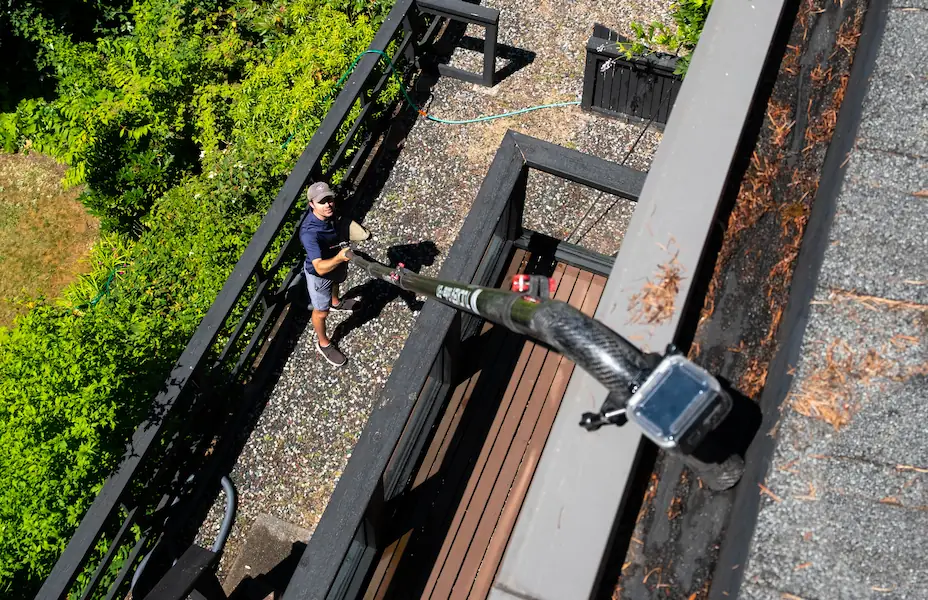
This guide explains the schedule, why Vancouver's weather sets it, the best time of year for each cleaning, and how to adjust it for your trees, your roof and your building.
How Often Should Gutters Be Cleaned?
Gutters should be cleaned at least twice a year, in fall and spring, with the fall cleaning in late fall. That builds on the Government of Canada's guidance to check eavestroughs and downspouts at least twice per year, during fall and spring, and more often after a severe storm, heavy rain or high winds (Government of Canada, 2026).
From there, the trees around your home decide whether twice is enough. Use this as a starting point:
- Few or no trees nearby. How often to clean gutters: twice a year. When: late fall and spring.
- Deciduous trees overhead (maple, oak, birch). How often to clean gutters: twice a year, timed to leaf drop. When: late fall, once most leaves are down, and spring.
- Fir, cedar or pine overhead. How often to clean gutters: three times a year, plus a check after big storms. When: late fall, mid-winter (around January) and spring.
- Strata, rental or commercial building. How often to clean gutters: twice a year, set on a fixed calendar. When: late fall and spring, plus a check after major storms.
If your gutters overflow between cleanings, add a visit. If they still overflow right after a cleaning, the gutters or downspouts may be too small for your roof. The Government of Canada suggests upgrading to a larger size when they consistently overflow in rainstorms, even with regular maintenance.
Why Vancouver's Rain Sets the Schedule
Vancouver's gutters need a fall cleaning that's ready for months of heavy rain. Environment and Climate Change Canada's 1991 to 2020 normals for Vancouver International Airport show precipitation jumping from 51.9 mm in September to 123.9 mm in October and 174.6 mm in November, with about 645 mm falling from October through January (Environment and Climate Change Canada, 2026).
That wet stretch overlaps with leaf season. The City of Vancouver noted leaves beginning to pile up in mid-October 2025, and scheduled its city-wide street leaf clearing to start in mid-November (City of Vancouver, 2025).
So the heavy rain arrives while the leaves are still coming down. A gutter cleaned too early can refill before the wettest months, and a gutter cleaned too late may already have been overflowing for weeks.
The Best Time to Clean Gutters in Vancouver
The best time to clean gutters in Vancouver is late fall, usually late October to early November, once most of the leaves near your home are down. The spring cleaning comes second, and homes under conifers add a mid-winter visit.
Late fall: the cleaning that matters most
The late-fall cleaning clears the year's leaf drop before the heaviest rain. For most homes, late October to early November is the window, and later in November can work if your trees hold their leaves longer, though bookings fill up quickly then. Fall is our busiest gutter season.
Our page on gutter cleaning before winter covers what that visit includes.
Spring: clearing what winter left behind
The spring cleaning clears what built up over the winter: needles, moss, roof grit and the silt that settles in the bottom of the trough. It's also a good time to spot anything the winter storms loosened, like sagging sections or downspouts that have pulled away.
A third visit for homes under fir and cedar
Evergreen conifers shed some of their old foliage every year, and most of it washes out in wind and rain through fall and winter (Pacific Northwest Plant Disease Management Handbook, 2026). Around Vancouver, that means cedar and fir needles can keep landing in gutters after the leaves are done.
A mid-winter cleaning, around January, clears those needles while the rain is still heavy. January averages 174.0 mm of precipitation at Vancouver International Airport, nearly the same as November (Environment and Climate Change Canada, 2026).
What Changes How Often Your Gutters Need Cleaning
Four things decide whether your gutters need more than the baseline: the trees, the roof, the storms and whether you have guards.
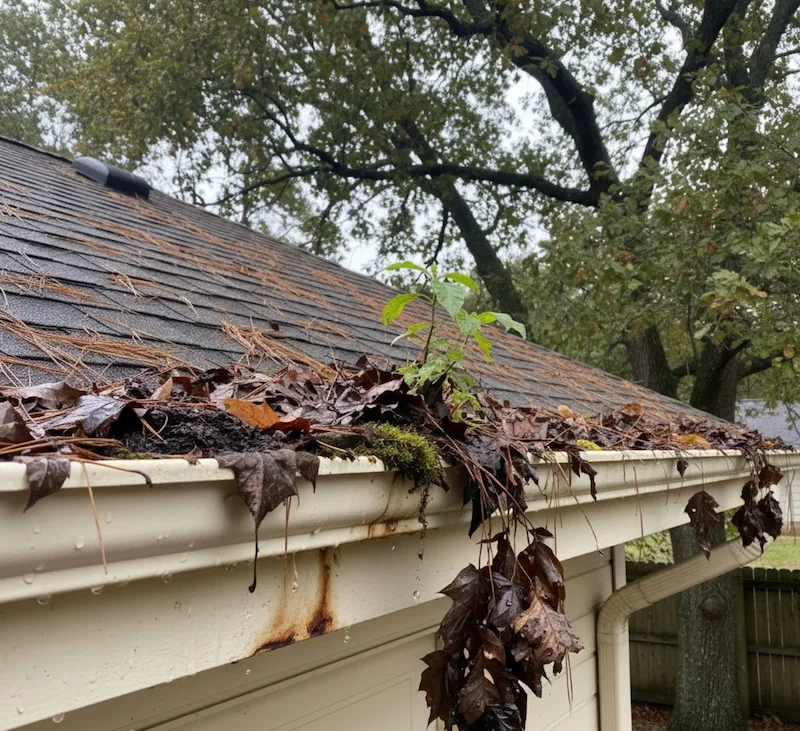
- Trees. Big trees overhanging the roof fill gutters fastest. Conifers add needles over a longer season than broadleaf trees.
- Your roof. Moist, shady rooftops are ideal for moss growth (Oregon State University, 2026), and moss that breaks loose can end up in the gutter. Roof grit from aging shingles adds to the silt in the trough.
- Storms and wind. Wind strips branches and blows debris in from down the street, and the Government of Canada advises an extra check after severe storms and high winds.
- Gutter guards. Guards cut down on leaves in the trough, and fine debris can still get past them. Our guide to whether gutter guards need cleaning covers how guards change the schedule.
Signs Your Gutters Need Cleaning Now
Your gutters need cleaning now if water spills over the edge in a normal rain, whatever the calendar says. Other signs to watch for:
- A downspout that drips or trickles while the gutter above it overflows
- Plants, moss or seedlings growing out of the gutter
- Sections that sag or pull away from the roofline
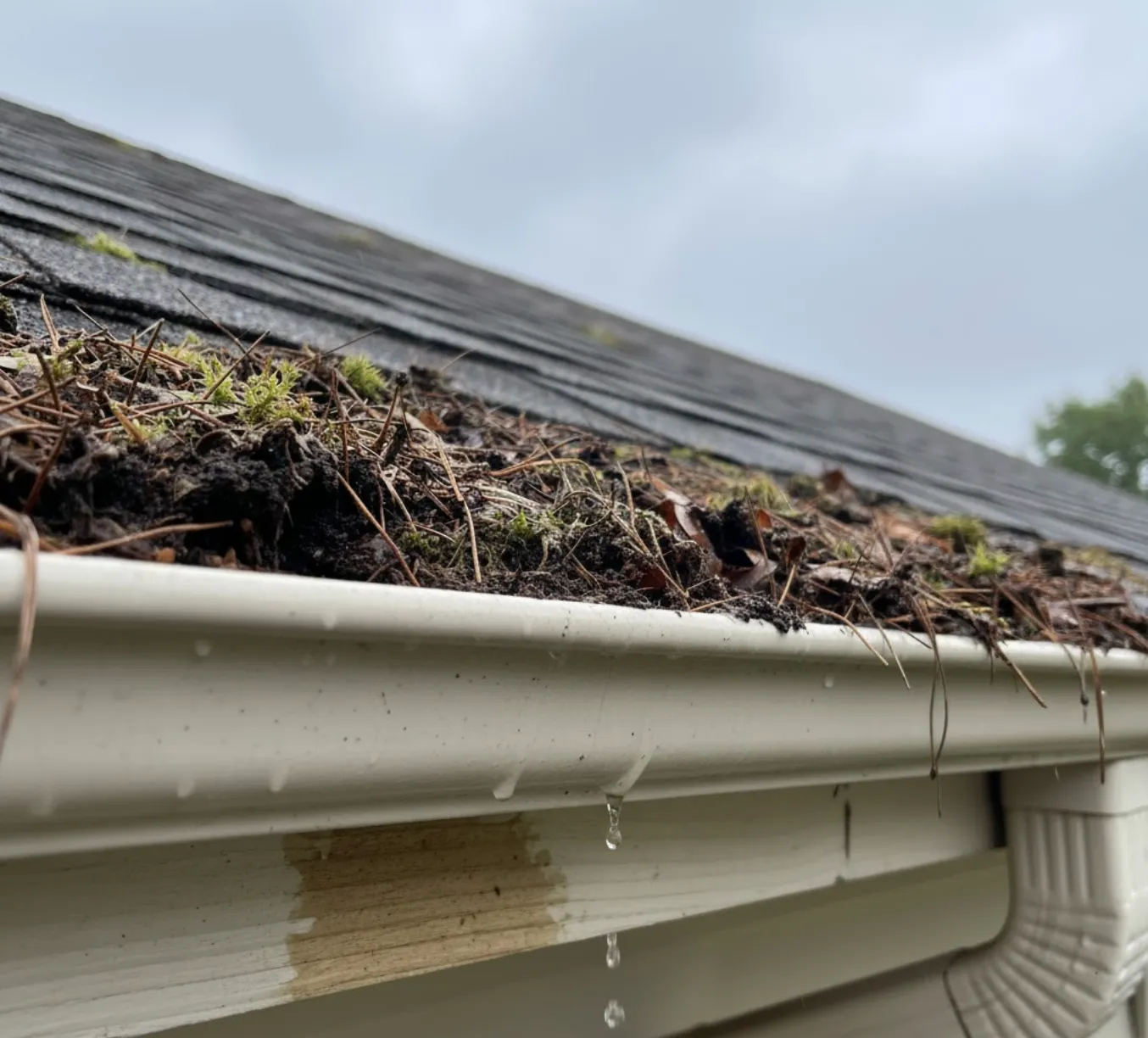
- Streaks on the siding or peeling paint along the fascia
- Puddles or washed-out soil along the foundation after rain
Any of these can mean water isn't getting through the gutter and down the downspout. Our guide to what happens if you don't clean your gutters explains where that water goes and what it does.
Setting a Schedule for a Strata or Rental Building
For a strata or rental building, set gutter cleaning on a fixed calendar: one visit in late fall and one in spring every year, plus a check after major storms. The Government of Canada's eavestrough guidance names landlords and property managers along with homeowners as the people who should take action (Government of Canada, 2026).
A fixed calendar makes the job easier to approve and budget, and it keeps residents from being the ones who notice the overflow first. When you book, ask for:
- Before and after photos, so the council or owner can see what was done
- Downspouts cleared and tested along with the gutters
- WorkSafeBC and insurance documentation for your records
Taller homes and buildings may need gutters cleaned from the ground or with specialized access. Our ladder-free gutter cleaning page explains how we handle those.
How We Handle Gutter Cleaning
Our crew clears debris from the inside of every gutter and checks that the system is working, including the downspouts. Every job starts with a walkthrough to check for existing damage and set expectations, and ends with a walkthrough of the finished work. We take before and after photos on every job, so you can see exactly what came out.
WashTech is registered with WorkSafeBC and carries $2 million in liability insurance, and we provide compliance documentation for strata and property management. Learn more about our gutter cleaning service, including gutter cleaning in Vancouver.
Frequently Asked Questions
Is cleaning gutters once a year enough?
For most Vancouver homes, no. The Government of Canada recommends checking eavestroughs and downspouts at least twice a year, in fall and spring. A single cleaning leaves either the winter's needles and silt or the fall's leaves sitting in the gutter through part of the wet season.
What's the best month to clean gutters in Vancouver?
Late October to early November, once most of the leaves near your home are down. Later in November can work if your trees hold their leaves longer, though bookings fill up quickly then. Precipitation at Vancouver International Airport averages 123.9 mm in October and 174.6 mm in November, so a gutter cleared in that window is ready for the wettest months.
Do downspouts need cleaning on the same schedule?
Yes. Downspouts collect the fine debris that washes through the gutter, and a clogged downspout makes a clean gutter overflow. Clear and test them every time the gutters are cleaned.
Do gutter guards change how often gutters need cleaning?
Guards usually mean lighter, less frequent cleanouts, and they still need checking in fall and spring. Needles, grit and silt get past many guards and settle underneath.
Do I need to be home for gutter cleaning?
We start and finish every gutter job with a walkthrough with you, to check for existing damage and set expectations at the start and review the finished work at the end. So it's best to be home for those two walkthroughs. If you can't be, let us know when you book. We take before and after photos of the work either way.
Key Takeaways
- Clean gutters at least twice a year, in late fall and spring, and three times under heavy fir or cedar cover.
- Vancouver's heavy rain starts in October, while leaves are still falling, so time the fall cleaning for late October to early November.
- Conifers keep shedding through fall and winter, so homes under them need a mid-winter cleaning and a check after big storms.
- Check after major storms, and add a cleaning any time gutters overflow in normal rain.
- Strata and rental buildings do best on a fixed fall and spring calendar with photos and documentation.
If you'd like a clear and straightforward quote for your home or building, contact WashTech and we'll usually get back to you within 24 hours.


I started WashTech in 2020 with a window cleaning kit and a straightforward goal. Build something reliable in a space full of inconsistency. Property owners across Vancouver kept telling me the same thing: contractors don't show up on time, don't communicate, and don't take pride in the work. That gap became WashTech.
Give us a call
604-757-2016
WashTech
.png)